
The Rules of Korfball
THE RULES OF KORFBALL
(Published on June 2026 and valid as of 1st September 2026) - *Video examples prior to the duo referreing system (to be updated)
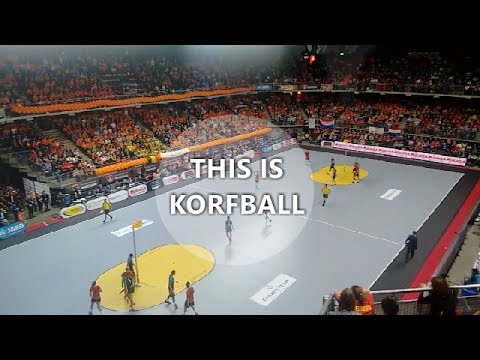
Korfball is a sport played by hand within a rectangular field of play whereby two mixed teams try to shoot a ball into the korf (basket) of the opposite team. The sport’s main characteristics encompass all-round skills, cooperative play, controlled physical contact, gender equality, players’ right to protected ball possession and scoring from 360° around the korf.
* The following rules are the normal rules used in adult matches, in particular, IKF Tournaments and Friendly International Matches. However, certain rules may be adapted to suit different competitions and local circumstances.
DEFINITION AND INTRODUCTION
Korfball is a sport played by hand within a rectangular field of play whereby two mixed teams try to shoot a ball into the korf (basket) of the opposite team. The sport’s main characteristics encompass all-round skills, cooperative play, controlled physical contact, gender equality, players’ right to protected ball possession and scoring from 360° around the korf.
The rules as published here are the official Korfball rules. These rules shall be used in full, without making use of any “exceptions”, in all senior national top leagues and national championships or cups, in Friendly International Matches and in IKF Official, patronaged, and recognised events. Deviations from these rules need to be officially reported to the International Korfball Federation before the start of the league season, match or match series, or event. Any deviation that is not officially reported to the IKF shall be considered a breach of the IKF Regulations. If the deviation constitutes an official experiment, prior permission needs to be obtained from the IKF Playing Rules Committee.
In lower level and youth competitions, certain rules may be adapted to suit different competitions and local circumstances, according to “The Rules of Korfball – Exceptions and Recommendations for Competition Regulations”.
Whenever exceptions or recommendations where Competition Regulations (“CR”) may change or adapt the requirements of the main rules of korfball, it is described in “The Rules of Korfball – Exceptions and Recommendations for Competition Regulations”.
Within The Rules of Korfball various words and phrases are used that are integral to the rules. Definitions of these words and phrases are given in the glossary.
This document is organised with the following structure:
(i) description of the rule or regulation; (ii) conditions to apply the rule; (iii) examples of the rule application, if necessary.
The blue text under each rule is the guidance note to assist with the control of the game where: (i) is described examples where the rule cannot be applied (if necessary); (ii) more detailed explanations are given.
GLOSSARY
Whenever the word "he" is used it should be understood that this could be "she".
Actually trying to block the ball: The conscious use of the arms and/or hands in an admissible manner to prevent a ball being thrown or shot.
Arm's length: The length of the arm (of defenders) measured in each position (vertical, bent, whilst standing on the floor or having jumped up) to their opponent. This size is used (measured from the defenders in their position to the torso of the attackers) as one of the four conditions to decide a shot must be defended.
Beating the Ball: Movement of an arm quickly towards the ball in such a way that contact takes place with the ball before it has left the opponent’s hands
Contact (controlled): Admissible manner of contact between players leading to neither player gaining an advantage over the other.
Contact (uncontrolled): Inadmissible manner of contact between players leading to one player gaining an unfair advantage over the other.
CR: Whenever the Initials “CR” are used it should be understood that this could be “match regulation” or “competition regulations”.
Female or male player (women or man): Refer to the IKF Gender Policy for the definition of a female player or a male player.
Hindering: Admissible manner of preventing the throwing or catching of the ball by an opponent.
Holding off: Admissible manner of using the body when maintaining or occupying a position, when the use of the body is made in such a manner that the opponent can prevent a collision.
Korf: Basket.
Obstacle free zone: The zone belonging to the playing area called “border area” where no obstacles (something which hinders; something which obstructs, holds back or causes problems) are allowed.
Passive Hindering: Passive hindering is where the opponent prevents the ball from being brought quickly into play by standing within an arm’s distance in front of the taker but not hindering the throw by any movement of the arms or body.
Pivot foot: The standing foot that a player must keep in place whilst moving their other leg or turning around their body.
Playing in a dangerous manner: Manner of playing which is dangerous to another player.
Protected ball possession: Whenever a player has reasonable control of the ball by holding it with one or two hands or letting the ball rest on the palm(s) of their hand(s) or in their fingers, and no opponent can take it away.
Scoring chance: Shooting chance with a reasonable to great possibility to score.
Shooting chance:
Chance to shoot from a free position.
They/Them/Theirs
Whenever the words "they/them/theirs" is used this could be “he/him/his” or "she/her/hers".
1 FIELD
1.1 Playing area
The playing area shall be deemed to be the field of play together with its border area, the benches area, the substitution spots and the jury table (see diagram 1).
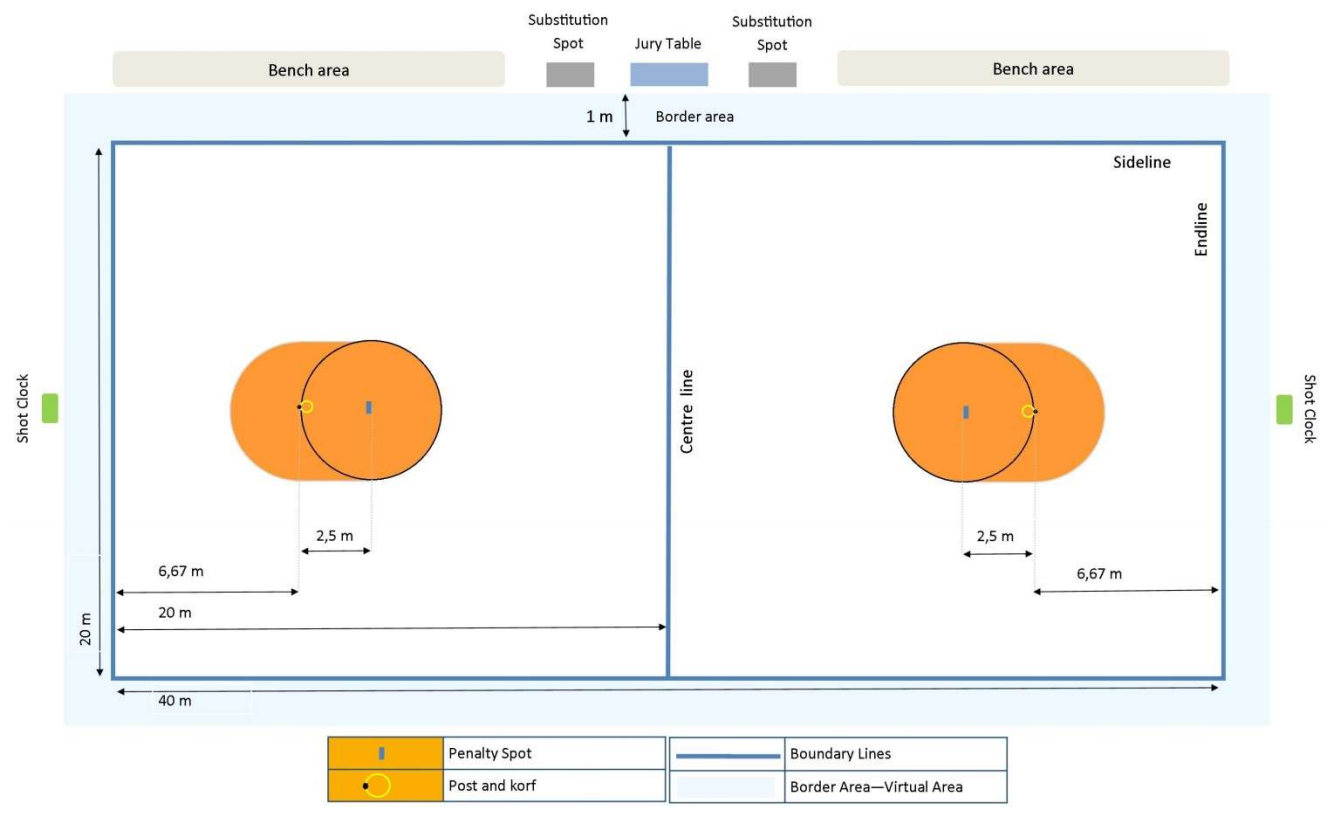
Diagram 1 – Playing Area
1.2 Field of play
The dimensions of the field of play are 40 x 20 m, divided into two equal zones by a centre line parallel to the ends of the field (see diagram 1).
The free height must be at least 7 m and the floor has to be even, dust-free and non-slippery.
1.3 Boundary lines
The field of play shall be limited by the boundary lines consisting of the endlines, the sidelines and the centre line, marked out by clearly visible lines, 3.0 - 5.0 cm wide (see diagram 1).
The field of play can also be marked by tape, 3.0 - 5.0 cm wide, stuck to the floor.
1.4 Penalty spot
A line about 15.0 cm by 5.0 cm is marked in front of each post as seen from the centre of the field (see diagram 1, 2 & 3).
The edge of the spot furthest from the post must be 2.50 m from the front of the post.
1.5 Penalty area
An area marked on the field around each post, of 2.50 m, in all directions, from the penalty spot, the post and any point on the imaginary line between the spot and the post (see diagram 1 & 2).
This area may be marked by either a solid colour contrasting from the other lines and surface of the field or by lines fixed on the ground showing the limits of the area.
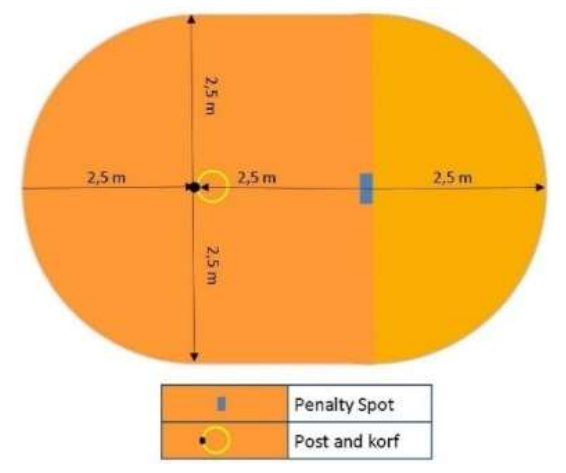
Diagram 2 – Penalty Area
1.6 Free pass area
A circle of 2.50 m radius measured from the centre of the penalty spot and at the edge of the penalty spot that is furthest from the post (see diagram 1 & 3).
This area may be marked by either a solid colour contrasting from the other lines and surface of the field or by lines fixed on the ground showing the limits of the area.
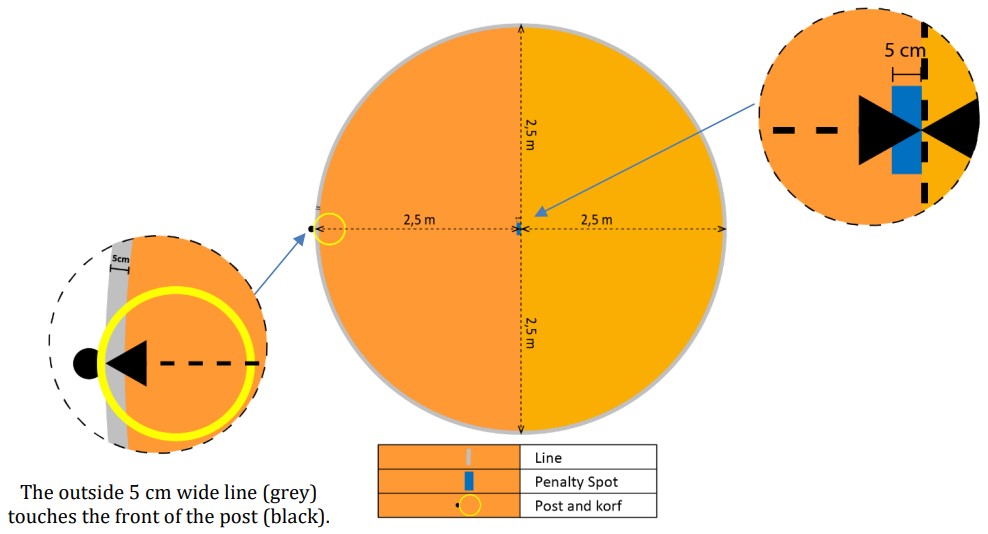
Diagram 3 – Free Pass Area
1.7 Border area
The border area is at least 1 m wide and surrounds the field of play. It must be kept free from obstacles (see diagram 1).
1.8 Bench area
Two benches shall be placed outside the border area, near one of the sidelines, one on each side of the jury table (see diagram 1).
1.9 Substitution spot
A rectangle 90 cm by 60 cm or a circle with 90 cm diameter marked on the floor outside the border area, between the end of each team bench and the jury table (see diagram 1).
2 MATERIAL
2.1 Posts
Posts with an external diameter of 4.5 - 8.0 cm are fixed perpendicularly in the ground in both zones at a point situated midway between the two sidelines and one-sixth of the length of the field of play from the endline (see diagram 1).
The posts should be round and can have squared ends to facilitate connection to the korf or the bases. It may consist of metal tubing or synthetic material. If synthetic material is to be used, the behaviour of this material must resemble that of metal tubing.
When it is not possible to fix the post into the floor, the post may be fixed to a sufficiently heavy large metal base plate as long as it complies with the following requirements:- it is completely flat;
- has a maximum thickness of 1.0 cm;
- the connection of the post must be such that the players cannot trip over it or be injured by it while passing or falling near it;
- cross-connections to the base are not permitted;
- an attempt must be made to maintain the stability of the post, e.g. fixing the base to the floor using tape.
2.2 Korfs
An IKF approved synthetic korf is fitted to each post.
The korf must:- be cylindrical without a bottom;
- Have its top edge at 3.50 m above the ground and parallel to it;
- be similar in a strong contrasting yellow colour;
- be facing the centre of the field.
- 23.5 - 25.0 cm high;
- 39.0 - 41.0 cm inner diameter on the top edge;
- 40.0 - 42.0 cm inner diameter on the bottom side;
- 2.0 - 3.0 cm top edge rim width.
- no movement of the korf with respect to the post is permitted;
- the post must not protrude above the korf.
2.3 Ball
Korfball is played with a round number 5 ball of a type that has been approved by the IKF. Its circumference should be 68.0 - 70.5 cm and the weight of the ball must be in the range 445 g to 475 g inclusive.
The ball must be inflated to the prescribed pressure indicated on it so that when it is dropped onto the playing surface from a height of about 1.80 m, measured from the bottom of the ball, it should rebound to a height of between 1.10 m and 1.30 m, measured to the top of the ball.
The ball shall have a printed pattern of at least two colours. This pattern must be so symmetrical that the ball, whilst turning, does not lose the visual effect of being round.
For more details see the IKF Ball Regulations.
3 EQUIPMENT
3.1 Jury table
Is placed outside the border area near the same sideline as the bench areas and in front of the centre line (see diagram 1).
The shot clock, time display and score displays’ control panels are placed on the jury table.
3.2 Time clock
A time clock consists of a time display and a sound signal buzzer. It must be placed outside the border area or above the playing area in a spot clearly visible from the jury table, the bench area and spectators.
The sound signal shall be sufficiently powerful to be easily heard in the most adverse or noisy conditions.
3.3 Shot clock
Shot clocks should be placed outside the border area at a height of at least 0.90 m in a clearly visible spot near to the centre of both endlines (see diagram 1).
The sound signal shall be sufficiently powerful to be easily heard in the most adverse or noisy conditions.
3.4 Scoreboard
A scoreboard consists of a score display. It must be placed outside the border area or above the playing area in a spot clearly visible from the jury table, the bench area and spectators.
4 PERSONS
4.1 Players
The players of each team must:- be dressed in numbered matching sports outfit sports outfit that is sufficiently different from that of the other team;
- use appropriate sports footwear;
- not wear any objects that might be considered dangerous, unless they are taped or fixed in a way that they are no longer dangerous;
- have closely cut and smooth fingernails.
Because it is a mixed sport, slight differences between mens and womens clothes are allowed on the same team outfits as long as they look similar and the same colour.
4.2 Substitute players
The maximum number of substitute players is six (three males and three females) . They must remain seated on the bench during the match except to warm up prior to substitution.
4.3 Captain
One player of each team is the captain. They must be a player who starts the match and shall remain as captain of the team throughout the match. They can only give up their role if they no longer take part in the match due to injury or red card. In this case one of the other players must be designated as the captain.
The captain wears a clearly visible band or tape in a contrasting colour to their shirt on the upper part of the arm (or on sleeveless shirts on top of one shoulder). They represent the team and are responsible for the proper conduct of their players.
The captain has the right to draw the referee's attention to anything they think desirable in the interest of the good progress of the match. Any approach must be made in a reasonable and correct manner in good faith and not too frequently. Misuse of this and/or criticism of the referees should be considered as misbehaviour (see 7.6).
In the absence of the team’s coach and assistant coach they take on the additional tasks of the coach.
4.4 Coach
Each team shall be accompanied by one coach who must sit on the bench allocated to the team. The coach is permitted to leave their place on the bench in a manner that will not disturb others, whilst remaining along the sideline where the teams’ benches are and outside the field of play, in order to:- give instructions to the team’s players;
- request and/or use a time-out (see 5.8);
- request and execute a substitution (see 5.9).
The coach is expected to make themselves known to the referee duo before the start of the match.
Entering the field of play without the permission of the referees or misuse of the right to leave their place in the bench should be considered as misbehaviour (see 7.6).
If the coach takes part in the match as a player, they can no longer be considered to be a coach and the rights as a coach lapse.
If at any time, there is no coach or assistant coach present the additional tasks named above go to the captain (see 4.3).
4.5 Assistant coach
Each team can also be accompanied by one assistant coach who must sit on the bench allocated to the team. Any time the coach is seated on the bench, the assistant coach is permitted to leave their place on the bench in a manner that will not disturb others, whilst remaining along the sideline where the teams’ benches are and outside the field of play, in order to:- give instructions to the team’s players;
Entering the field of play without the permission of the referees or misuse of the right to leave their place in the bench should be considered as misbehaviour (see 7.6).
If the assistant coach takes part in the match as a player, they can no longer be considered to be an assistant coach and the rights as an assistant coach lapse.
The assistant coach takes on the tasks of the coach only when the coach is no longer present.
4.6 Other persons attached to the team
The maximum number of other persons attached to the team who are allowed to sit on the bench is three (3), in addition to the coach and the assistant coach (or four (4) if there is no assistant coach). They must all remain seated on the bench during the match, except the team’s medical staff member, who is allowed to leave the bench to examine/treat an injured player and can enter the field of play, only with the permission of the referees.
4.7 Referee duo
The control of the game is an exclusive task of the referee duo. Both referees are equally empowered to execute this task. They must wear an outfit that is sufficiently different from the competing teams.
Their tasks are:
a) to decide the suitability of the hall, field of play, material and equipment
Before the match, the two referees ascertain that all conditions (according to 1, 2 & 3), satisfy the requirements and those conditions are maintained during the game. They must not tolerate noncompliance in this respect.
Dangerous obstacles in the hall or a very slippery floor are reasons to cancel the game.
The referees must be aware of their responsibility as regards to injuries and illnesses that the players might incur as a result of unfavourable conditions of the playing area. They can assume that the players are in good health.
b) to indicate the starting, stopping and restarting of the game
To start, stop or restart the game one of the referees blows their whistle.
They must start or restart the game as soon as the player taking the throw is ready and all the requirements (according to 7.3 d), 7.4 b) or 7.5 d)) are satisfied.
The referee duo must stop the game whenever:- action must be taken owing to changed circumstances such as ground, material or equipment (according to 1, 2 & 3);
- a goal has been scored;
- an infringement must be punished;
- the end of each period occurs;
- an unfair advantage occurs (according to 4.6 e);
- a player is bleeding;
- a player who falls and/or gets injured without contact, and not being able to stand up immediately, and stays in a position that poses an injury problem for themselves and/or others;
- misbehaviour or interference by the public occurs;
- both teams intentionally play passively in turns (see 6.9);
- it is not possible to continue the match owing to changes in the line-up (according to 5.1)
The referee duo punishes infringements of the rules unless they choose to play on (according to 7.2).
They may punish any infringements of the rules at any time during the match, even when play has been stopped.
d) to use the official signals to clarify his decisions
As describe in the “Referee signals” (acording to 8).
After blowing to whistle for an infringement, the referees will normally first indicate whether it is a penalty, free pass or re-start and which was the non-offending team by signalling the direction. Following this, the signal for the type of infringement should be indicated.
e) to take action when one side obtains an unfair advantage from circumstances outside the game
After blowing their whistle to stop the game, the referees allow the players to get back to their position and give the ball to the team that should have had ball possession.
Examples of unfair advantage are:- a referee hinders a defender so that the attacker obtains a scoring chance;
- the defender falls as a result of an accidental collision between attacker and defender when neither player has committed a foul. In these cases, the referees stop the game and allow the defender to take up their position;
- a player is prevented from catching the ball because the public has crossed a boundary line. If, in the opinion of the referees, the player would normally have caught the ball, then the referee duo will give the ball to the player concerned.
(according to 7.6).
This includes players, coaches, substitutes, other persons attached to the team.
g) to take action against interference by the public
When it appears necessary to the referee duo, they can let the public be warned, or they can cancel or terminate the match.
In the case of interference by the spectators, the referee duo will ask the captain to have this stopped. In the case of repetition, the referee duo may adjourn or terminate the match, as circumstances require.
h) check players for dangerous items
(according to 4.1).
4.8 Jury
The jury assists the referee duo in controlling the match protocol, rules and regulations.
The jury instructs and supervises the shot clock operator, timekeeper and scorer during the match.
After a time-out request, when play has stopped or, the team who requested the time-out has the ball possession, the jury should make an audible signal to advise the referee duo and use a sign to indicate a time-out has been requested and by which team.
After a substitution request, when play has stopped, the jury should make an audible signal to advise the referee duo and use a sign to indicate a substitution has been requested and by which team.
The signal may not be any sound that could be misinterpreted as the sound of the referee’s whistle.
In a situation not covered by the protocol, rules and regulations the jury may advise the referees, who will take the decision regarding this situation..
4.9 Timekeeper
The timekeeper is responsible for the playing time and operates the time clock, according to 5.2.
4.10 Shot clock operator
The shot clock operator is responsible for controlling the 25 seconds time-limit in the attack zone and operates the shot clock, according to 6.16.
4.11 Scorekeeper
The scorekeeper is responsible for the game score and operates the scoreboard, according to 5.5.
5 THE GAME
5.1 Teams
From each team four (4) men and four (4) women are declared as the starting team, of whom two (2) of each gender are placed in each zone. The other players are listed as substitutes.
When one or both teams are incomplete, the game can only start, or be continued, if a line-up is possible that ensures that no zone has fewer than three players from each team and that these can be matched by gender (i.e. one female and two male players opposed by one male and two born female players is not possible).
If in case of injury or player sent off with red card, the number of players with a direct opponent is less than the minimum required and substitutes were not immediately available, the referees can permit and even order a change in the line-up, to comply with the conditions mentioned above.
If it is possible to satisfy the conditions in more than one way, then the referees decide after taking the advice of both coaches. They must try to avoid unfair advantage to one of the two sides and keep the number of changes as few as possible..
If a team has not fielded a player, or they are missing for good reasons, (e.g. injury or because the opposing side did not field a full team), then it always has the right to bring this player in but this counts as one of the maximum number of substitutions allowed. When both sides are incomplete then the captain of the away team must place their players in such a way that the number of players without a direct opponent is minimised.
5.2 Playing time
A match is played in two (2) halves of 25 minutes of real playing time and each half is divided in two (2) equal periods by a technical time-out of a one (1) minute break.
The time clock starts every time a player first touches the ball after it leaves the hands of the taker of the:- Throw off;
- Restart;
- Out ball;
- Free pass;
- Missed penalty;
- Recommencement of the game after the referee had stopped it due to a defender injury or fall.
- time expires at the end of every period;
- the referees blow their whistle for any reason when the game is being played;
- a goal is scored for one of the teams.
5.3 Golden goal
When the game has ended in a draw, a decision is obtained by playing a golden goal period of ten minutes as described below:- the game must re-start after a 1-minute break;
- the game re-starts with a throw off for the team who had the ball possession at the end of regular playing time;
- both teams must attack to the same korf as at the end of the regular playing time;
- same line-up must be maintained in the same zones as at the end of the regular playing time.
Substitutions are allowed at any time according to 5.9.
When the buzzer sounds to the end of the regular playing time, if:- the ball is in the air or no player has reasonable control of the ball, the ball possession is given to the team who was the last to have controlled ball possession;
- the ball had left the hands of a shooting attacker, was on its way to the korf and this shot passes through the korf, a goal is awarded and if this goal equalises the score, the ball possession is given to the team who conceded the goal. A change of ends must happen when necessary according to 5.6.
- a toss is made immediately after the end of the golden goal period;
- the winner of the toss chooses if it takes the first penalty or not and to which korf the penalties are taken;
- the coaches of both teams inform the Jury about the sequence of players who will take the penalties and after this moment, no more substitutions are allowed, and the sequence must be alternating male and female players to take the penalty;
- series of penalties are taken using the “sudden death” system, where penalties are shot in the set sequence until one team has scored a goal more than the other has from the same number of penalty shots
After the coach hands over the sequence of players to the Jury, the players are obliged to take the penalty in the set order. If for any reason a player does not take the penalty, it is considered to be a missed shot.
During the penalty shots only the eligible players and match officials are permitted to remain on the field of play and all players, except the penalty taker, must remain behind the centre line.
5.4 Start of the game
The home team starts with the ball by a throw off (see 5.7) in the first half and chooses which korf it will attack. After half time break both teams change the ends where they attack, keeping the same line-up and the away team starts with the ball.
After the technical time-out between periods, the game restarts with a throw-off for the team who had the ball possession at the end of the previous period, with the same rules as the start of a Golden Goal period (see 5.3).
5.5 Goals
A goal is scored when the ball has, from above, completely passed through the korf and it has not first been thrown from underneath, has passed through the korf and then had fallen back again through the korf.
It is also a goal if it is sure that the ball would have fallen completely through the korf but a defender prevented it to happen by tapping it back from underneath.
Every goal adds one point to the score and it is credited to the team attacking in the zone into which korf the ball has entered.
The goal shall not be allowed when:- tthere was an infringement committed by the attacking team before the ball has gone through the korf;
- the ball has fallen through the korf following a throw from the defence zone of the attacking team or directly from a throw off, free pass, or re-start:
- the ball had left the hands of a shooting attacker after the whistle or signal for the end of any period of the game.
When the score of both teams is equal after regular playing time a golden goal period must be played to find the winner.
5.6 Zone changes and changes of ends
Each time two goals have been scored the players change their zones and with this, the roles of the players change. Attackers become defenders and defenders become attackers.
There is no change of roles at half time, merely a change of ends.
5.7 Throw off
The throw off is taken by an attacker from a point inside their zone no more than 2m from the centre of the field with the same stipulations as for a re-start (see 7.3).
A throw off takes place:- at the start of each period of the match;
- after every goal by the team who has just conceded the goal.
5.8 Time-out
The time-out is a one-minute break in the game, requested by one team’s coach.
Each team has the right to request two time-outs per match.
Procedure- The coach requests a time-out to the jury, at any time;
- At the next stop of the game by the referees, or ball possession of that team, the timekeeper makes an audible signal to notify the referees that a time-out has been requested;
- The referees authorise it by doing the time-out signal (see referee signals);
- After 50 seconds the referees blow their whistle to indicate that both teams have to retake their positions. The game should be restarted within 60 seconds of the start of the time-out;
- After the time-out, the match is restarted on the spot and in the manner that it would have been restarted if no time-out had occurred.
If the coach submits the time-out request when the game has already been stopped (throw off, treatment of injured players, infringement of the rules), but before the restart, the request will only be granted, if the request is made on time allowing the timekeeper and jury to communicate the request by an audible signal and showing the ‘time-out (T)’ sign before the game is restarted.
If the time-out is awarded without a stop of the game, the timekeeper can only make the signal to notify the referees when a player of the team who requested the time-out is holding the ball.
If the request by the coach doesn’t allow sufficient time, the time-out will be communicated to the referees at the next stop of the game and will be authorized by the referee. Treatment of an injured player on the field of play should be completed before a time-out can be given..
A time-out must be completed by the game restarting before any new time-out can be given.
During a time-out the coaches and the teams shall stay on, or in the immediate vicinity of, the bench allocated to each team.
5.9 Substitutions of players
Substitutions of players are only allowed during an interruption of the game.
A maximum of eight (8) substitutions are allowed per team.
Procedure- The substitute player must be ready in the substitution spot (see 1.9);
- The coach requests the substitution to the jury;
- At the next stop of the game by the referees the timekeeper makes an audible signal to notify the referees a substitution has been requested;
- The referees authorise it by doing the substitution signal (see referee signals);
- After the substitution, the match is restarted on the spot and in the manner that it would have been restarted if no substitution had occurred..
- the substitute player is ready in the substitution spot;
- the request is made allowing the timekeeper and jury sufficient time to communicate the request by an audible signal and ‘substitution’ sign to the referees before the game is restarted.
When being substituted, a player may not return into the other zone at the same time. The game must have restarted before they become eligible again to be used as a substitute.
A player sent off by the referees must be replaced by a substitute. The change shall be considered to be one of the maximum number of changes allowed. Furthermore, if the player sent off is not immediately replaced then the team shall still be deemed to have used one of the maximum number of substitutions referred to above and, in addition, the team may not have any more substitutions until such a replacement is made.
If the maximum permitted number of substitutions has already been reached, then a player who has been sent off, or injured players who can no longer take part in the match, may still be replaced with the permission of the referees.
A player being replaced must leave the field of play before the substitute player may enter.
A player that has been substituted must sit on the bench.
Failure to inform the referees of a substitution shall be deemed as misbehaviour.
5.10 Treatment of injured players
An injured player is allowed to be assessed/treated for a period of one minute starting when the medical attendant reaches the local. If after one minute the player is deemed not to be fit to immediately continue then, provided the injury is such that it is safe to move the player, he should be immediately removed from the field and be substituted.
During the treatment of an injury, players must remain in their zones and the coaches must act according to 4.4.
In the case of a bleeding player, the player must leave the field of play immediately and may not return until the bleeding has stopped, the wound has been covered and the blood has been removed.
6 INFRINGEMENTS OF THE RULES
During the game it is prohibited:
6.1 To run with the ball
When a player in possession of the ball changes his position.
The infringement of this rule depends on the initial position and action of the player, as explained in the three following situations:
a) A player receives the ball whilst standing in a stationary position.
They are not allowed to move one foot and subsequently lift the other foot before the ball has left their hands, particularly during a scoring effort.
They are permitted to:
- move one foot at will provided the other one remains in its place as a pivot foot;
- rotate on itself, moving both feet, while maintaining the same starting position;
- change the pivot and moving their foot provided the initial position does not change;
- jump provided that the leg that was the pivot foot immediately before the jump is used for the take-off;
- after a jump, come down with the ball still in their hands, provided the landing position is almost the same as the starting position where they jumped from.
A player should not be penalised for moving a bit over the field during a throw that is discontinued before completion.
b) A player receives the ball whilst running or jumping and comes to a stop before they throw the ball or shoot.
After seizing the ball, they must immediately try to come to a stop within the least possible distance.
In deciding on the question of whether a player has done everything to stop, the referees must consider the conditions of the field, as well as the speed and the technical capacity of the player.
After coming to a stop, the same rules apply as mentioned under 6.1 a).
c) A player receives the ball whilst running or jumping and throws the ball or shoots before they have completely come to a stop.
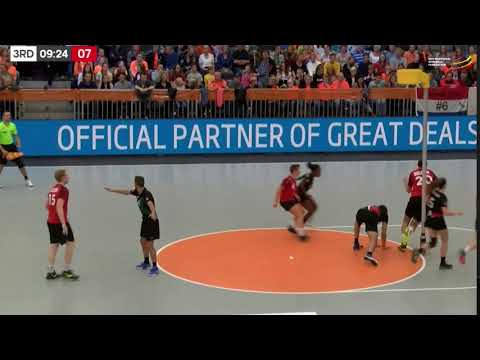
They are not allowed to still be in possession of the ball at the moment they place a foot on the ground for the third time after receiving the ball.
When a player seizes the ball while they are obviously in contact with the ground, then this contact has to be considered as the first one.
Example #1
INFRINGEMENT: Violation of rule 6.1 c)
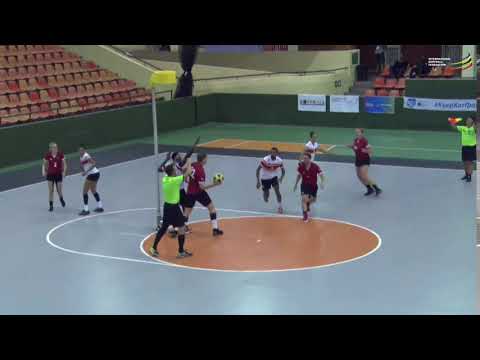
Example #2
INFRINGEMENT: Violation of rule 6.1 c)
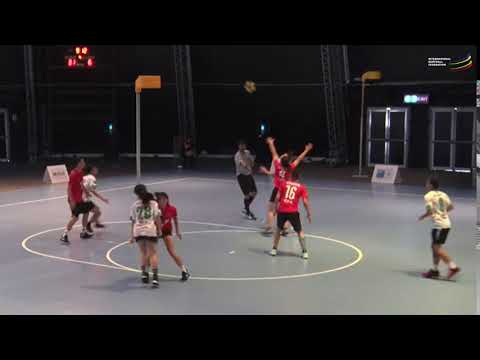
Example #3
INFRINGEMENT: violation of rule 6.1 c)
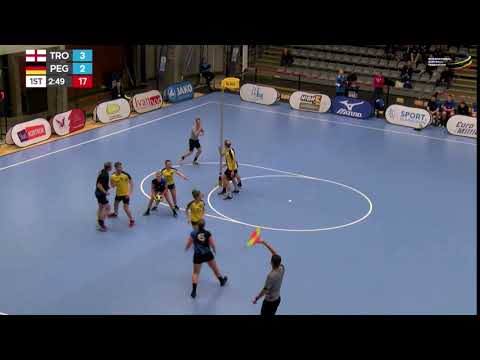
Example#4
INFRINGEMENT: violation of rule 6.1 c)
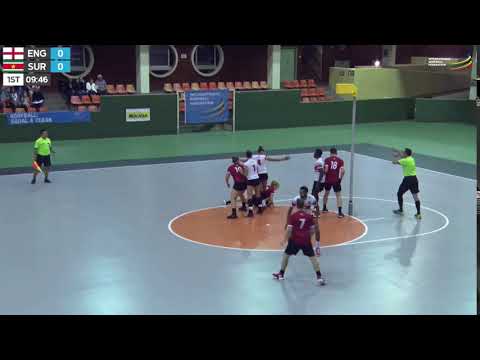
Example #5
NO INFRINGEMENT.
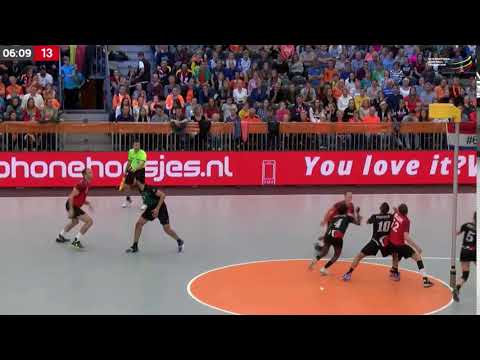
Example #6
INFRINGEMENT: violation of rule 6.1 a)
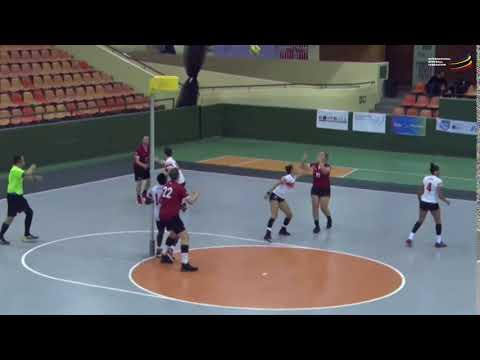
Example #7
NO INFRINGEMENT.
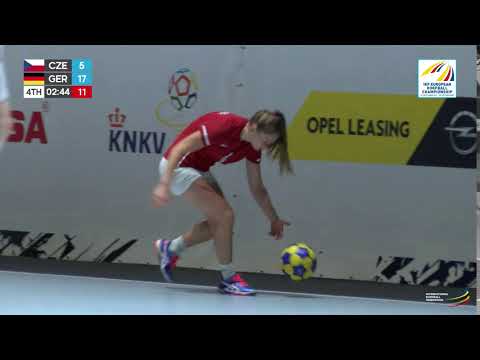
Example #8
INFRINGEMENT: violation of rule 6.1 c)
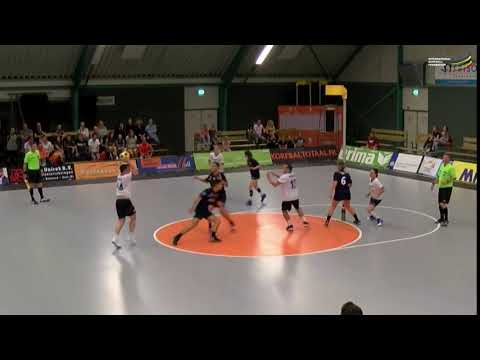
Example #9
INFRINGEMENT: violation of rule 6.1 c)
6.2 To solo play
Whenever a player intentionally plays the ball avoiding cooperation with a teammate and the following two conditions are met:
- the player changes their position considerably;
- the avoidance of cooperation is intentional.
Examples of solo play are:
- a player throws the ball away with the intention of collecting it elsewhere. This is not allowed even if they throw the ball against another player or against the post.
- a player taps the ball along while running beside it when the ball could have been taken earlier. This must also be punished because it makes the later seizing of the ball easier.
Examples where solo play should not be punished:
- when a player tries to pass the ball to another player but the latter fails to catch the ball, then the first player is allowed to recover the ball;
- when a player is not changing their position; e.g. a player, while standing still, throws the ball from one hand to the other, or bounces the ball on the ground and seizes it afterwards;
- tapping the ball along when the ball cannot be seized directly;
- when two opponents contest the ball from a stationary position, by jumping for it or by reaching for it whilst running next to each other. If one of the players does not have a sufficient lead they are permitted to knock the ball on in a favourable direction to seize it afterwards. They are allowed to shoot from a position obtained in this manner. In such a duel it may occur that the ball may be touched several times before it is finally seized by one of the players. The same thing might occur when a player tries to keep the ball within the boundaries of their zone.
He is allowed to shoot from a position obtained in this manner. In such a duel it may occur that the ball has to be touched several times before it is finally seized by one of the players. The same thing might occur when a player tries to keep the ball within the boundaries of his zone.
The referees have to consider the technical capabilities of the players. The better the player the earlier it can be assumed that cooperation has been avoided intentionally.
Example #1
NO INFRINGEMENT.
6.3 To shoot from a defended position
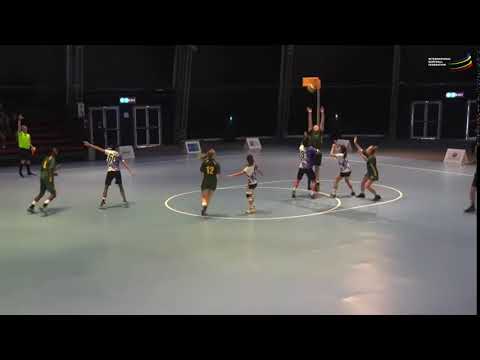
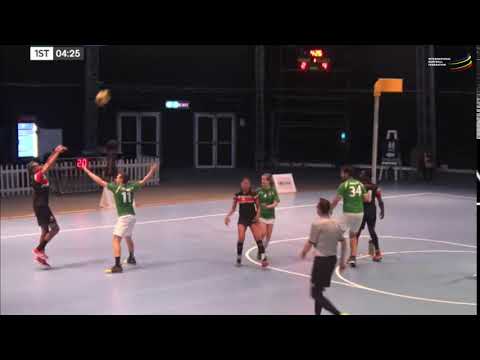
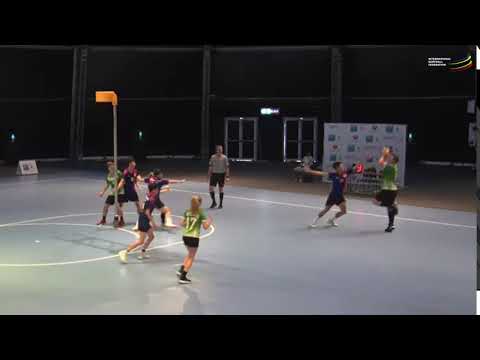
Whenever an attacker player shoots the ball towards the korf while a defender satisfies all the following conditions:
a) is actively trying to block the ball;
b) is within one (1) arm’s length in relation to the attacker;
c) is nearer the post than the attacker;
d) they have their face turned towards the attacker.The rule is based on the desire to encourage players to cooperate together to attain free positions from which shots may be taken and prevent slick hand and arm movements being rewarded by a goal.
When judging the distance of an arm’s length between the attacker and the defender, the referees must consider (visualise) the vertical position of both players.
A shot must still be considered defended when specific circumstances do not allow for one of the four (4) conditions to be satisfied:
Exceptions where a shot must still be considered defended when one of the four (4) conditions are not satisfied:
Condition a) cannot be achieved when:
- the attacker is much taller than the defender, and because of that, the defender cannot actually block the ball;
- the attacker, having jumped up, shoots or taps the ball over the hindering arms of the defender towards the korf;
- the attacker has received the ball while they have their back to the korf and the defender is behind them.
Condition b) cannot be achieved when:
- the attacker standing in a defended position steps, or jumps backwards, without infringing 6.1 (to run with the ball) and shoots. If the defender immediately tries to follow their movement and actually tries to block the shot, even if the attacker is out of an arm’s length..
Condition c) cannot be achieved when:
- the attacker is so close to the post that the hindering defender cannot stand nearer the post and the defender and the attacker are on opposite sides of the post.
A shot cannot be considered defended if:
- the defender doesn’t actually try to block the shot (the simple raising of the arm is insufficient);
- the torso of the defender is further from the post than that of the attacker. It is not sufficient when the defender’s hand or arm is nearer the post. The reference must be most of the torso (upper body) being closer to the post;
- the defender is unaware that the attacker has the ball in their possession (very fast shot, tapping);
- during a shot against a tall defender or when the defender jumps up, the ball is touched but the defender was not within an arm’s length at the instant the shot is taken.
Example #1
No infringement of rule 6.3
Example #2
No infringement of rule 6.3
Example #3
INFRINGEMENT: violation of rule 6.3.
Example #4
No infringement of rule 6.3.
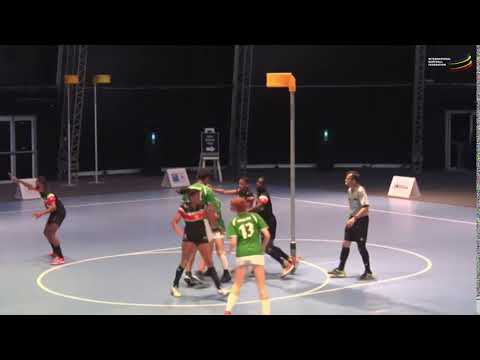
Example #5
No infringement of rule 6.3.
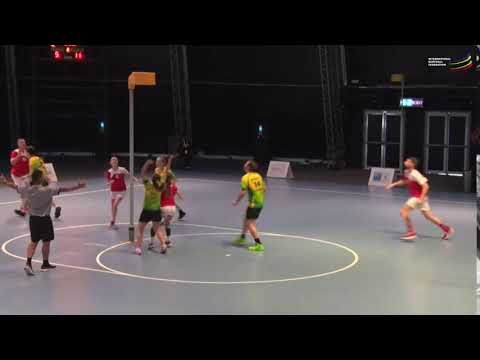
Example #6
INFRINGEMENT: violation of rule 6.3.
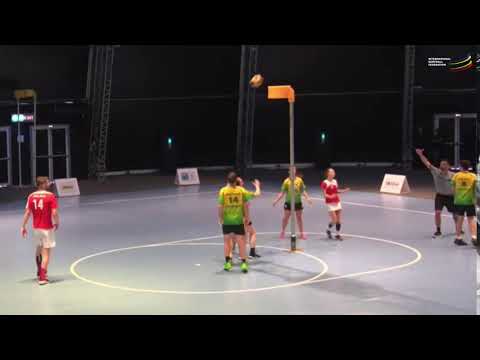
Example #7
No infringement of rule 6.3.
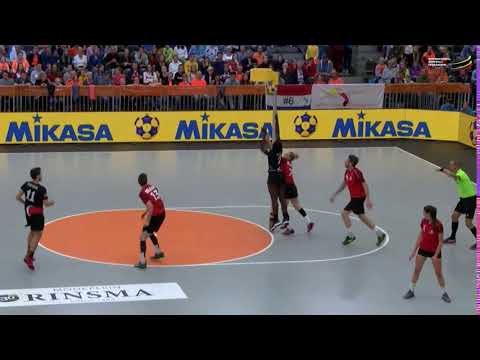
6.4 To shoot after cutting past another attacker
Whenever an attacker player shoots the ball at the korf after their defender has been forced to give up their defending or hindering position because cutting occurred as described.
A defender, who is in a defending or hindering position within an arm’s length of their attacker, cannot follow them because the attacker takes a path so close past another attacker that the defender collides with, or is likely to collide with, this second attacker and is therefore forced to give up their defending or hindering position.
Cutting in itself is not an offence, only shooting after cutting is..
Cutting is also punishable when the cutting attacker first passes the ball to one of their teammates to improve their position and then shoots from the return pass.
If the defender is not at an arm’s length from the attacker when they run close by a teammate, then ‘cutting’ does not apply and the shot must be allowed.
After being forced to give up their defending or hindering position because cutting occurred, if the defender does not immediately try to recover their initial position then the shot is allowed and no cutting can be considered.
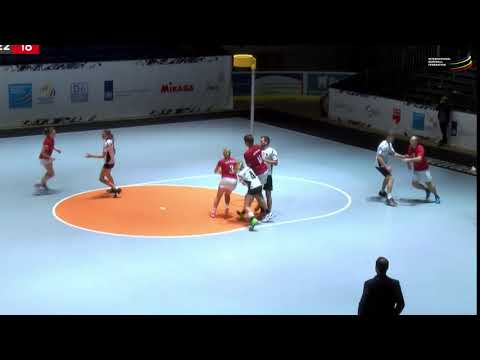
Example #1
INFRINGEMENT: violation of rule 6.4
6.5 To hand the ball to another player of one’s own team
Whenever a player hands the ball to another player of one’s own team without the ball having neither first moved freely through the air or it was free on the ground.
If two players of the same team seize the ball at almost the same time and one of these players then take his hands off the ball, it can never be considered to be an infringement of this rule.
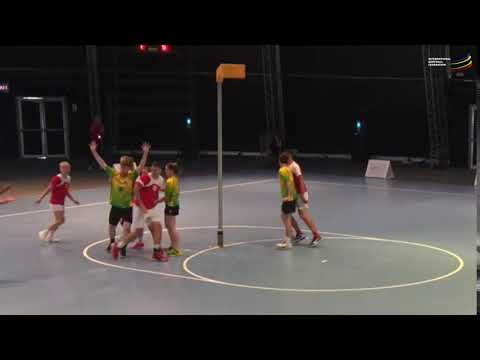
Example #1
INFRINGEMENT: violation of rule 6.5
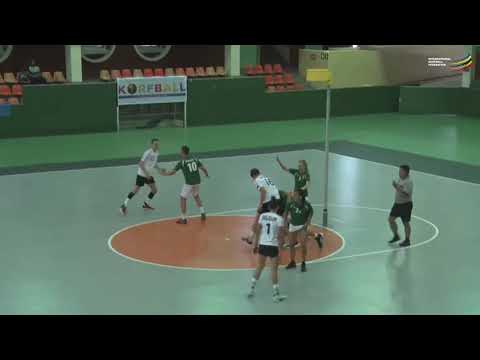
Example #2
INFRINGEMENT: violation of rule 6.5
6.6 To hinder an opponent of the opposite sex in throwing the ball
Whenever a player makes any action to hinder an opponent of the opposite gender in throwing the ball and the following two conditions are satisfied:
- the player who is in possession of the ball is actually trying to throw it;
- the distance between the two players is less than the combined lengths of their arms.
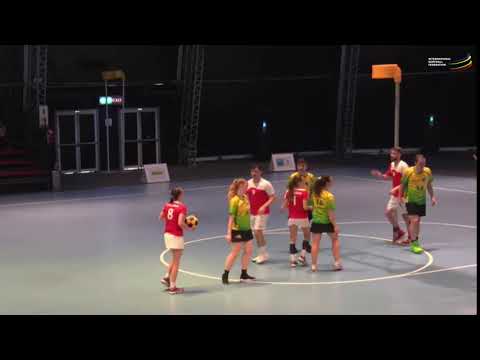
Example #1
INFRINGEMENT: violation of rule 6.6
Example #2
INFRINGEMENT: violation of rule 6.6
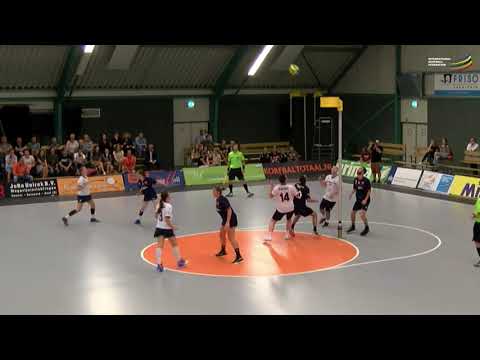
Example #3
INFRINGEMENT: violation of rule 6.6
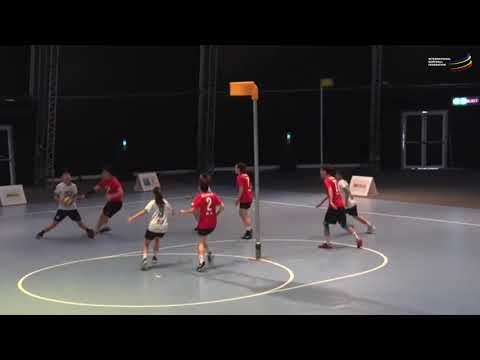
6.7 To play the ball with leg or foot
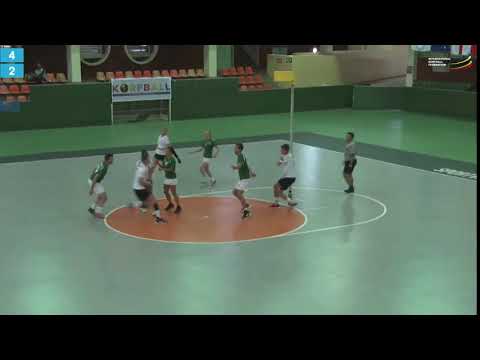
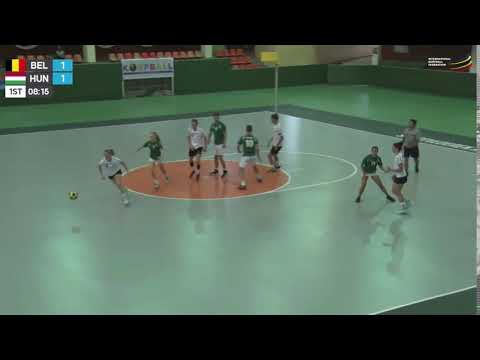
Whenever a player plays the ball with the leg from the knee downwards or foot.
Infringement only occurs when this is intentional.
Example #1
No infringement of rule 6.7
Example #2
No infringement of rule 6.7
6.8 To touch or hold the post
Whenever a player touches or holds the post with any part of the body and:
- It influences the result of a shot (intentionally or unintentionally);
- uses it for jumping higher, running, change direction or to move away quickly.
When an attacker moves the post during a shot:
- if the movement is intentional, a re-start will be awarded to the defence;
- if the movement is unintentional without a goal, the referees should play-on.
When a defender moves the post during a shot:
- if the ball goes through the korf, the goal counts even if the referees have already blown for this offence;
- if the movement of the post might have prevented a goal, a penalty will be awarded to the attack;
- if the movement is intentional without the possible loss of a goal, a free pass will be awarded to the attack;
- if the movement is unintentional without the possible loss of a goal, it’s play on.
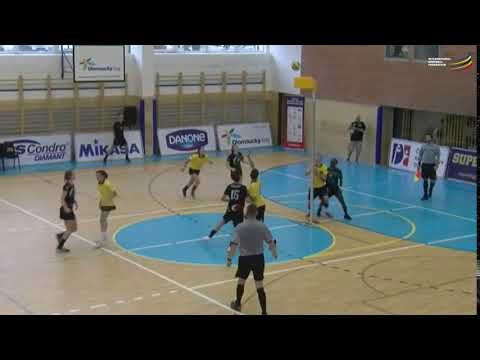
Example #1
INFRINGEMENT: violation of rule 6.8
6.9 To passive play
Whenever a player or team, at any time during the match, plays in a way solely concentrating on maintaining possession of the ball. No matter if in bringing the ball from defence to attack or in the attack zone where actions aimed to create and use scoring chances must remain recognisable.
Examples of passive play are:
- waiting too long before passing the ball;
- excessive passing aimed at delaying getting the ball into the attacking zone;
- playing the ball back from the attack to the defence, unless this is done to set up an attacking move;
- excessive passing aimed at not creating shooting chances;
- intentionally ignoring clear shooting chances;
- both teams passively play in turns or appear to accept the score as it is with no ambitions to change it.
The referees should not blow immediately to stop the game when:
- in the last phases of a close-scoring match, the winning team decides to play more cautiously and avoid high risks;
- the strategy of the defending team changes trying to force their opponents to use shooting chances by becoming less active in hindering, accepting the risk of a goal, in the hope that an unsuccessful shot will provide a better chance of gaining control of the ball.
In both cases, however, the play may not continue solely concentrating on maintaining ball possession. In the play of the attacking team, actions aimed to create and use scoring chances must remain recognisable.
Referees, in deciding whether or not players are passively playing, should bear the following points in mind:
- the technical capacity of the players;
- the degree to which the opposing team does everything in its power to prevent scoring chances or gain the ball possession.
6.10 To score from the defence zone of the attacking team or directly from a throw off, out-ball, re-start or free pass
Whenever a player scores from the defence zone of the attacking team or directly from a throw off, an out-ball, a re-start or a free pass.
Except when the re-start results from a stop in the game other than an infringement of the rules.
Examples:
- treatment of injured players;
- a case of unfair advantage;
- a case of a bleeding player.
6.11 To hinder an opponent excessively
Whenever a player hinders an opponent and:
- knocks, takes or runs the ball out of their hands;
- limits the free use of their body by blocking their arm instead of the ball;
- hits the throwing arm or beats the ball, i.e. the hindering arm or hand must not move quickly towards the ball in such a way that contact takes place with the ball before it has left the opponent’s hands.
For this rule to be violated the opponent must have reasonable control of the ball by holding it with one or two hands or letting the ball rest on the palms on their hands or in their fingers.
It is allowed to hinder an opponent in throwing f the ball in the desired direction by using actions that result in the ball being thrown against their hand or arm.
No infringement occurs when:
- the hindering arm and hand are brought in the path of the throwing arm in an attempt to intercept the ball which is touched after it has already left the hand of the thrower;
- the contact with the ball is made while it is still on the hand of the thrower but the hindering arm or hand is at rest..
Unexpected movements by an opponent will often cause a restriction in a player’s freedom of movement. Such cases will not be punished, provided immediate action is taken by the opponent to restore the player’s freedom of movement.
If there is only slight contact and the pass is not affected unfavourably, then the referees should play on.
Strong action must be taken when the hindering degenerates into “hitting” even when the throw does not fail (except when a scoring chance results from the throw: the referees will then await the result and warn the offending player later).
Example #1
INFRINGEMENT: violation of rule 6.11
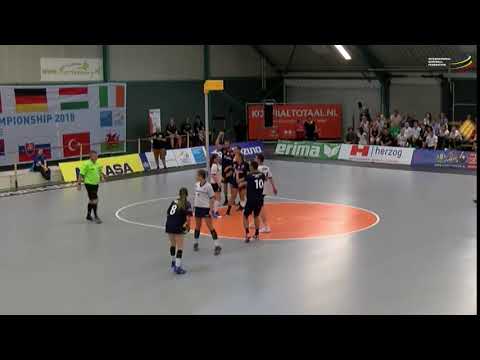
Example #2
INFRINGEMENT: violation of rule 6.11
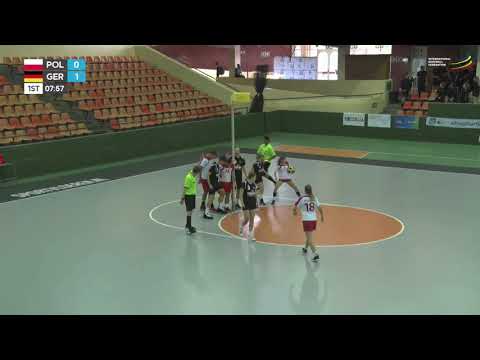
Example #3
INFRINGEMENT: violation of rule 6.11
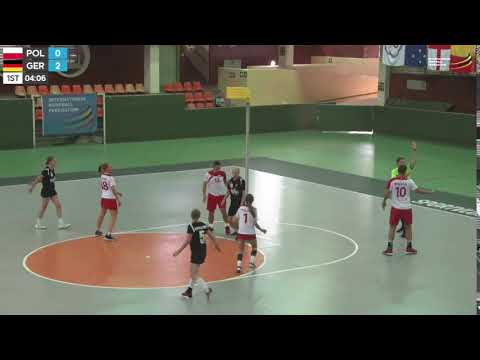
Example #4
INFRINGEMENT: violation of rule 6.11
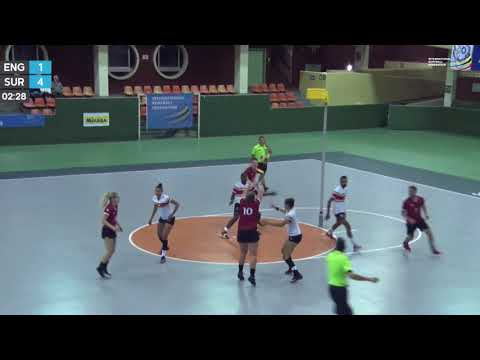
Example #5
INFRINGEMENT: violation of rule 6.11
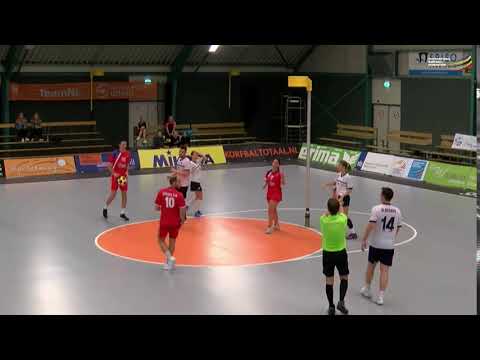
Example #6
INFRINGEMENT: violation of rule 6.11
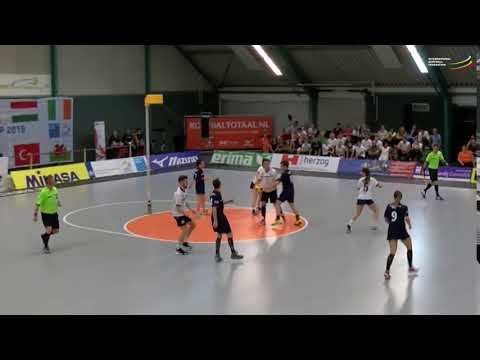
Example #7
INFRINGEMENT: violation of rule 6.11
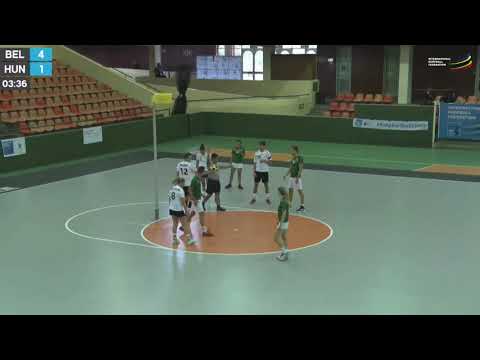
6.12 To push, to cling to, or to hold off an opponent
Whenever a player blocks the free movements of an opponent, deliberately or not and no matter whether this opponent does or does not possess the ball and even if the ball is in the other zone.
Examples of unlawful holding off are:
- pushing;
- running down;
- landing on a stationary opponent after jumping;
- a player intentionally positions themself where a jumping player will land;
- preventing an opponent from standing up or jumping up;
- bending into the path of a jumping opponent;
- extending an arm or leg to an approaching or passing opponent thus forcing them to take a longer path around the first player;
- deliberately move into the path of a defender stopping them from following their opponent.
This rule does not force a player to give way for another player or to position themselves where they want unless they move so suddenly into the path of a moving opponent that a collision becomes inevitable.
On the other hand, an attacker must try to avoid a collision with the defenders. When they run into a defender to put them off balance or when they push them out of their defending position with their body, then the attacker shall be punished.
The ban on holding off ensues directly from the fact that Korfball is a game of skills and not of strength.
Holding off by means of spreading out arms or legs does not necessarily mean actually preventing an opponent from moving. An infringement already occurs when the opponent is forced to take a longer path around the offending player to avoid their arms or legs.
It often occurs that two players contact each other in an effort to seize the ball. Such contact will only be punished if it is the result of recklessness or holding-off. In these cases, the referees have to decide who is to be blamed. This may be either the player to whom the ball is passed to or their opponent who tried to intercept it.
The so-called “jumping at the line” should only be punished if the opponent has been prevented from using their body freely. No offence is committed when the defender taps the ball before it has come within the reach of the attacker. On the other hand, an offence is committed if the defender, standing next to or behind the attacker, hangs over them, making it difficult for them to catch the ball and then taps the ball.
The tapping of the ball while jumping can only be punished if it leads to physical contact degenerating into running down or jumping-down.
Example #1
INFRINGEMENT: violation of rule 6.12
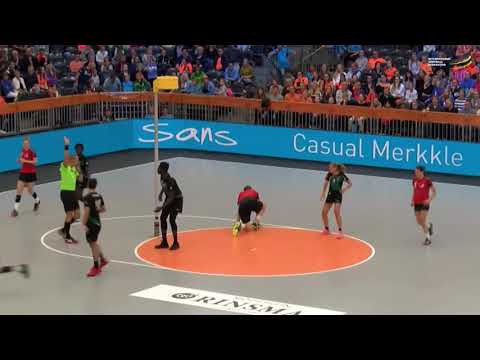
Example #2
INFRINGEMENT: violation of rule 6.12
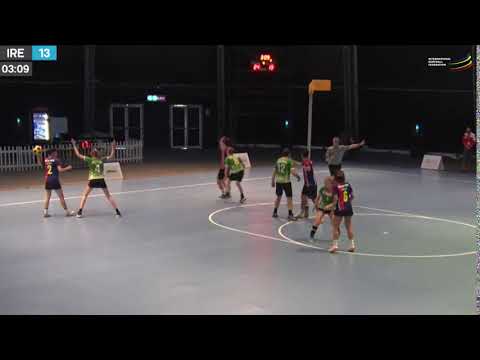
Example #3
INFRINGEMENT: violation of rule 6.12
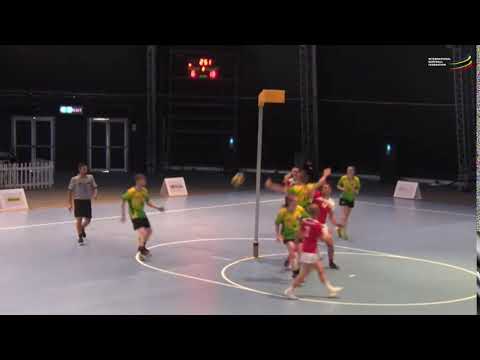
Example #4
INFRINGEMENT: violation of rule 6.12
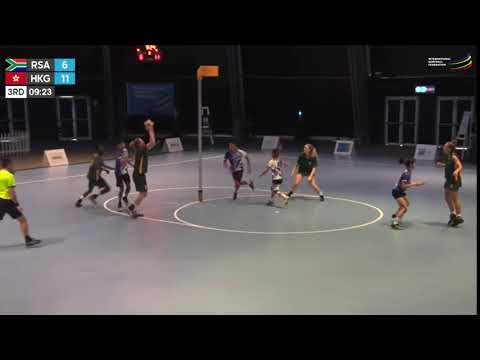
Example #5
INFRINGEMENT: violation of rule 6.12
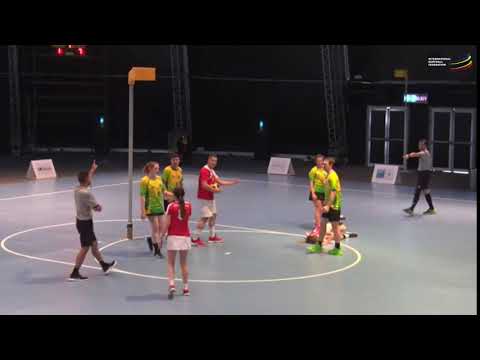
Example #6
INFRINGEMENT: violation of rule 6.12
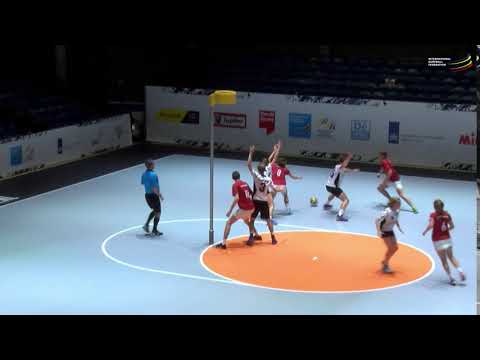
Example #7
INFRINGEMENT: violation of rule 6.12
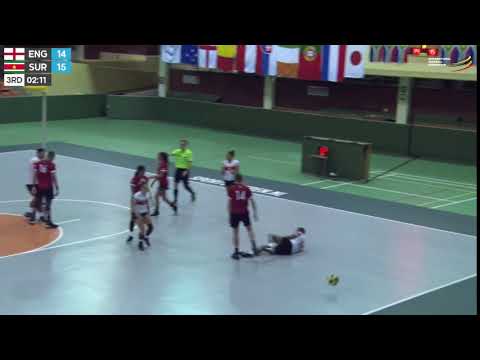
Example #8
INFRINGEMENT: violation of rule 6.12
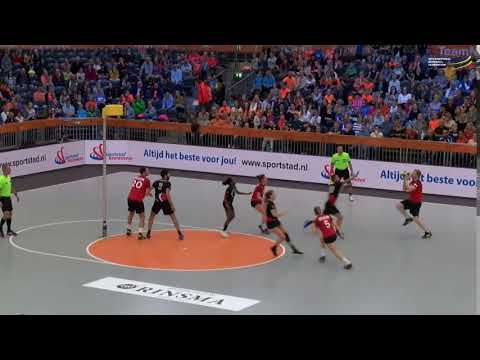
Example #9
INFRINGEMENT: violation of rule 6.12
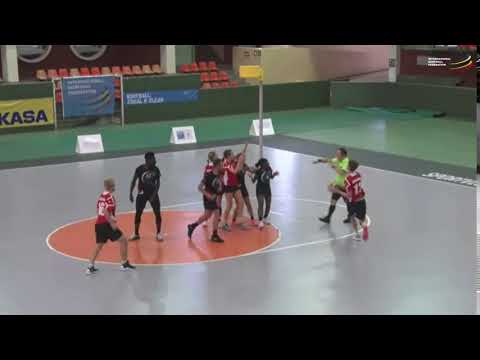
Example #10
INFRINGEMENT: violation of rule 6.12
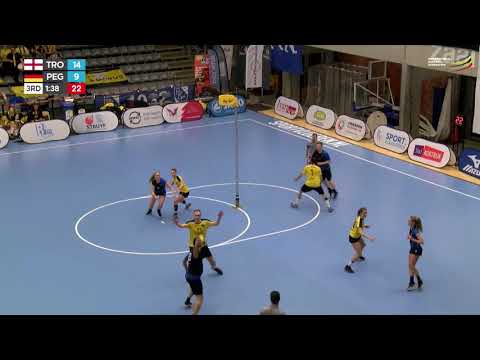
Example #11
INFRINGEMENT: violation of rule 6.12
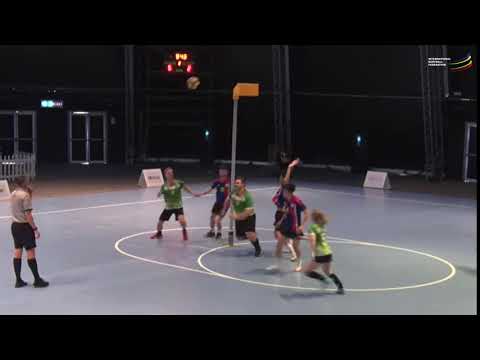
Example #12
INFRINGEMENT: violation of rule 6.12
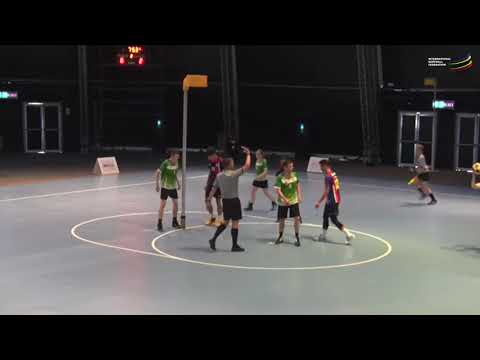
Example #13
No infringement of rule 6.12
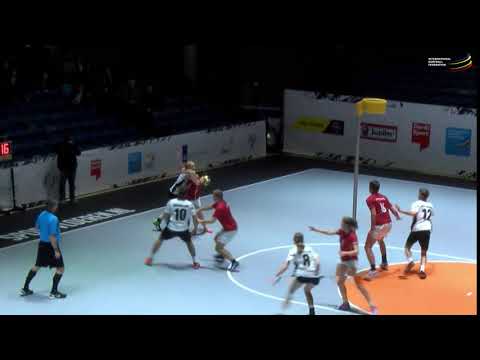
6.13 To play in a dangerous manner
Whenever a player plays in a manner that puts in danger any other player.
Examples of dangerous play are:
- aan attacker takes their path in a way that they subsequently force their defender, who is within an arm’s distance of the attacker, to collide at speed with another attacker;
- in the above-mentioned situation if the defender is aware of the attacker in their path, or becomes aware of it in such a time that they could avoid a collision and still causes the collision on purpose then the defender shall be punished;
- a player intentionally throws the ball against the body of an opponent;
- a player hits the ball in a dangerous manner, for example towards the face of the opponent;
- a player lands on a stationary opponent after jumping;;
- a player intentionally positions themself where a jumping player will land.
While judging which situation is the case, the referees must take into account the technical and tactical level of the players and the speed with which the attacker moves towards or past the other attacker.
When a light unintentional collision takes place, which does not influence the continuation of the game, the referees may decide to play-on..
Example #1
No infringement of rule 6.13
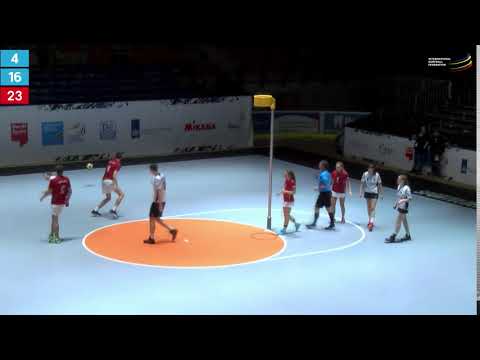
Example #2
No infringement of rule 6.13
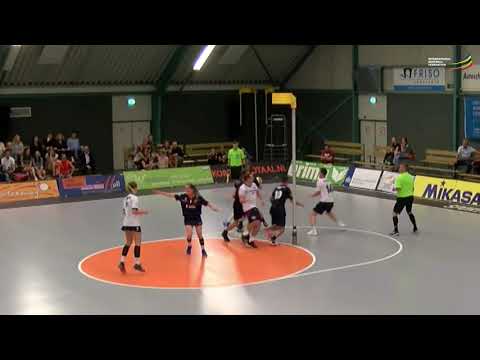
Example #3
No infringement of rule 6.13
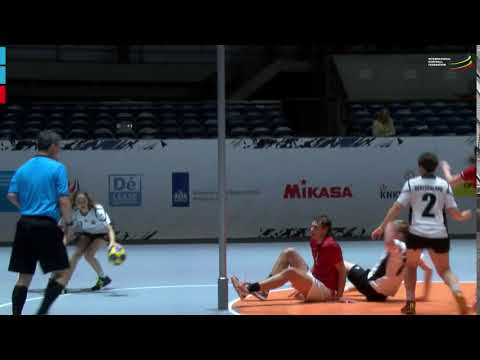
Example #4
No infringement of rule 6.13
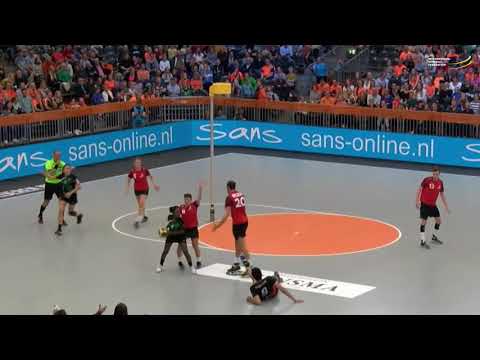
Example #5
No infringement of rule 6.13
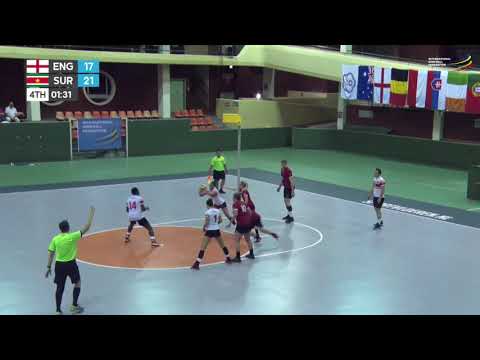
Example #6
No infringement of rule 6.13
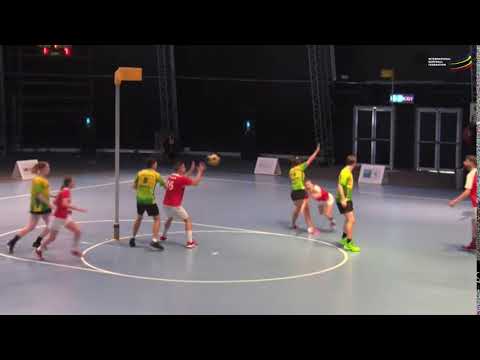
6.14 To play outside one’s zone
Whenever a player touches the ball or hinders an opponent and one of the two following conditions is true:
- while they are touching a boundary line, the centre line or the ground outside their zone;
- they previously jumped from a boundary line, the centre line or the ground outside their zone.
Example #1
No infringement of rule 6.14
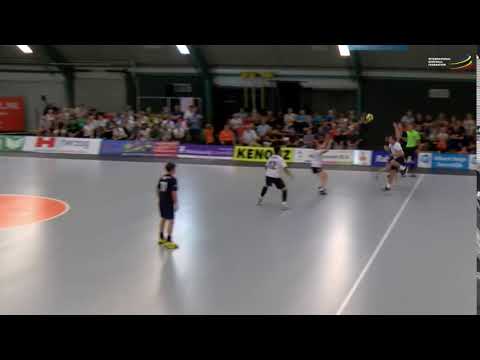
Example #2
No infringement of rule 6.14
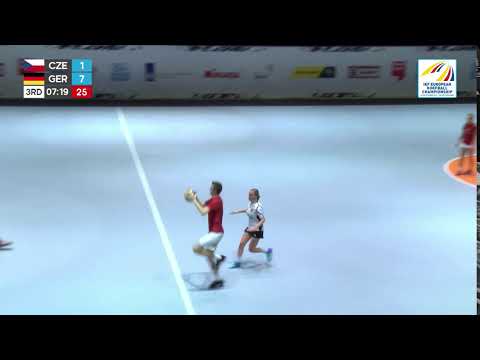
Example #3
INFRINGEMENT: violation of rule 6.14
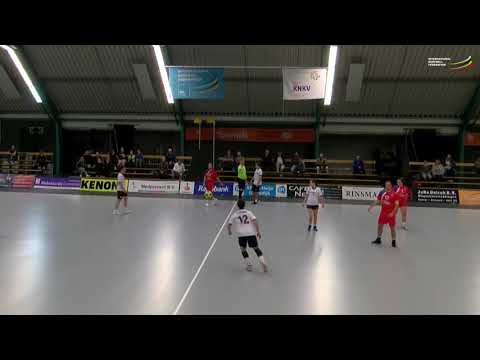
6.15 Out-ball
Whenever the ball touches any of the following:
- a boundary line of the field of play;
- the ground, a person or an object outside the field of play;
- the ceiling or an object above the field of play.
A re-start is awarded against the team that touched the ball last.
The field of play is not three-dimensional. It is therefore permitted to hit the ball, wherever it may be, back into the playing area, provided that the ball has not touched anything listed above and to play outside one’s zone (see 6.14) is not violated.
For an out-ball, the referees cannot allow the match to play-on, they must always punish the infringement.
When the ball is out because it touches the ceiling or an object above the field of play, the out-ball is taken near one of the sidelines and nearest to the spot where the ball touched the ceiling or the object.
If the ball touches a spectator or an object within the field of play, and it influences the ball possession, then the referees award the ball to the team who would have had possession without this interference.
Example #1
INFRINGEMENT: violation of rule 6.15
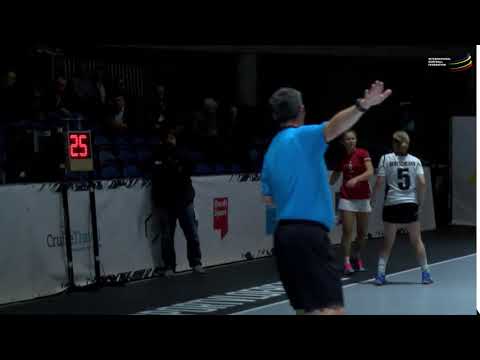
Example #2
No infringement of rule 6.15.
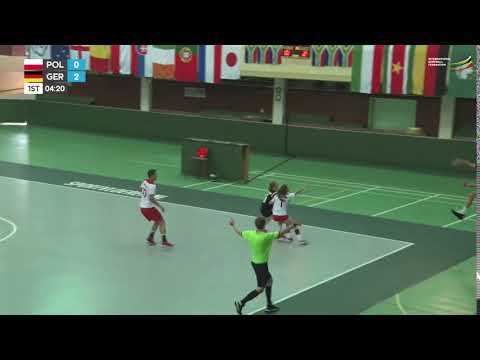
Example #3
INFRINGEMENT: violation of rule 6.15
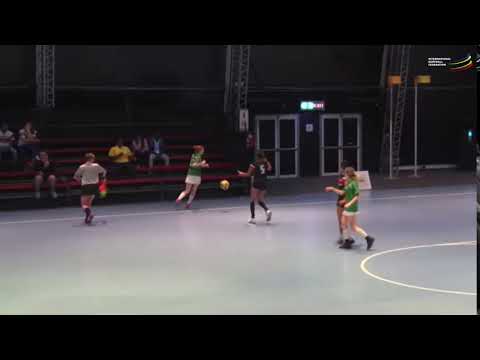
6.16 To exceed the allowed time-limit in the attack zone
Whenever the attacking team exceeds the 25 seconds time-limit to attack by neither scoring a goal nor making the ball touch the korf from a shot by a player in the attacking zone.
This time-limit is indicated by a shot clock according to the procedures described below.
Exceeding the time-limit is indicated by the buzzer of the shot clock.
After exceeding the time-limit, the referees stop the game and awards a re-start to the defending team unless they decide to play-on in case the non-offending team has possession of the ball.
Procedure
a) The shot clock starts counting down from 25 seconds when:
- an attacker first touches the ball in their attack zone;
- an attacker touches the ball after the ball is brought into play by the taker of a throw off; a re-start or a free pass;
- an attacker touches the ball after a missed penalty;
- the referees whistle for the recommencement of the game after they have stopped it, due to a defender injury or fall.
b) The shot clock is reset on 25 seconds and starts counting down when:
- the ball touches the korf after a shot by an attacker.
c) The shot clock is stopped and reset on 25 seconds when:
- a defender takes the possession of the ball;
- a score is given by the referee;
- a period of the match has ended;
- the referees whistles for a re-start, a free pass or a penalty;
- the referees whistles for an injury of a defender.
After one of the situations mentioned in c) occurs, the shot clock starts from 25 seconds (accordingto a)).
d) The shot clock is stopped when the referees whistles:
- for an out-ball;
- to stop the game due to an injury or fall of an attacker player;
- for situations of unreasonable advantage;
- for any interruption of the game for circumstances other than those mentioned above.
After one of the situations mentioned in d) occurs, the shot clock continues counting down from the time it was stopped. The shot clock starts counting down at the moment the referees whistle for the recommencement of the game, except for an out-ball. For an out-ball, the shot clock starts counting down at the moment the first attacker touches the ball after the ball is brought into play
If the ball touches the korf directly from the throw from the taker of the out-ball, the shot clock is not reset to 25 seconds.
When an attacker plays the ball directly or indirectly via a defender, backwards to a teammate in the defence zone, the shot clock is not stopped and is not re-set on 25 seconds again when an attacker comes in possession of the ball directly after such an occurrence.
If it may not be clear that the ball has touched the korf, the referees should indicate that they have seen the ball touch the korf by using the official signal (see referee signals).
The referees have the responsibility to check if the clock is being stopped and started correctly in accordance with the rules..
The referees will also allow a goal if, when the buzzer sounds, the ball had left the hands of a shooting attacker, was on its way to the korf and this shot passes through the korf.
Example #1
INFRINGEMENT: violation of rule 6.16
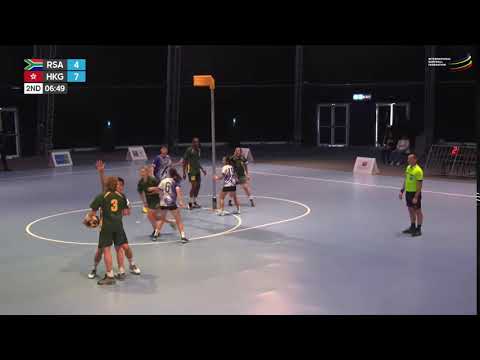
7 SANCTIONS & DISCIPLINARY
7.1 Types of sanctions
Every time a player violates one of the rules of the game, the referees must take one of the following actions according to the criteria described:
a) Play-on
Used with the aim to maintain the speed of the game, when the non-offending team has possession of the ball after an infringement that would result in a re-start (i.e. the infringement is nonintentional and without uncontrolled contact).
b) Whistle for a re-start
After any infringement of the rules done unintentionally and without uncontrolled contact, when the offending team has possession of the ball.
After an infringement committed by an attacker in their attack zone.
c) Whistle for a free pass
After any infringement of the rules done by a defender (a player in their defence zone), intentionally or with uncontrolled contact, regardless of the team that has ball possession.
An infringement committed by an attacker (a player in their attack zone) cannot be punished by a free pass.
d) Whistle for a penalty
After any infringement which results in the loss of a scoring chance or infringements which repeatedly hinder the attack unfairly.
Examples where a penalty should be awarded:
- a player prevents an opponent in a free position from shooting, for example, by pushing or running down (see 6.12);
- incorrect or excessive hindering (see 6.11) or hitting the ball out of an attacker’s hands thus preventing them from passing the ball to an attacker who has a free scoring chance;
- holding off, clinging to or running against an attacker thus preventing them from running into a free position (see 6.12);
- a defender influences the shot unfavourably by moving the post (see 6.8);
- a player hinders an opponent of the opposite gender who has a free scoring chance (see 6.6);
- the defending team makes an infringement for the second time at the same free pass (see 7.4 e)), including the 4 seconds preparation time and the taken of the free pass.
When the non-offending team immediately obtains a goal-scoring chance and the referees blow their whistle after the ball has left the player’s hands and is on its way to the korf, then provided the conditions of 5.4 (goals) are fulfilled, the goal will count and no penalty is awarded.
A penalty should also be awarded if an infringement which results in the loss of a scoring chance is committed by a player, or players, in the other zone.
Being a controlled contact sport means that during play contact between players of both teams is allowed but the referees must react when the controlled or uncontrolled contact between players leads to one player gaining an unfair advantage. In this case, they should punish the player making the contact in accordance with the infringed playing rule.
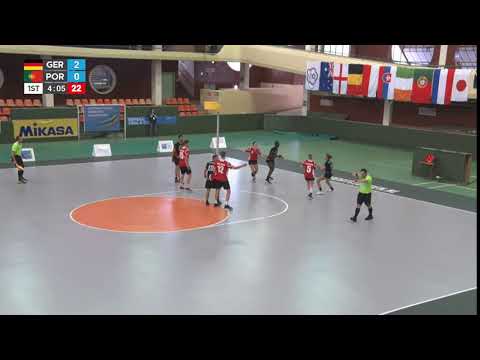
Example #1
Player n.10 clearly walks with the ball. The main referee is in perfect position to see it and makes the official signals so everybody can understand the reason of the Restart in favour of the other team.
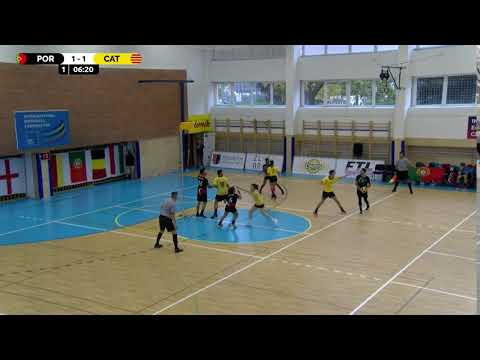
Example #2
This a strange movement of the attacker, but there is no infringement because while running he receives the ball and pivots on his second foot. There is no 3rd step.
Example #3
Player n.10 clearly walks with the ball. The main referee is in perfect position to see it and makes the official signals so everybody can understand the reason of the Restart in favour of the other team.
Example #4
This a strange movement of the attacker, but there is no infringement because while running he receives the ball and pivots on his second foot. There is no 3rd step.
Example #5
Player n.10 clearly walks with the ball. The main referee is in perfect position to see it and makes the official signals so everybody can understand the reason of the Restart in favour of the other team.
Example #6
This a strange movement of the attacker, but there is no infringement because while running he receives the ball and pivots on his second foot. There is no 3rd step.
Example #7
Player n.10 clearly walks with the ball. The main referee is in perfect position to see it and makes the official signals so everybody can understand the reason of the Restart in favour of the other team.
7.2 Play-on
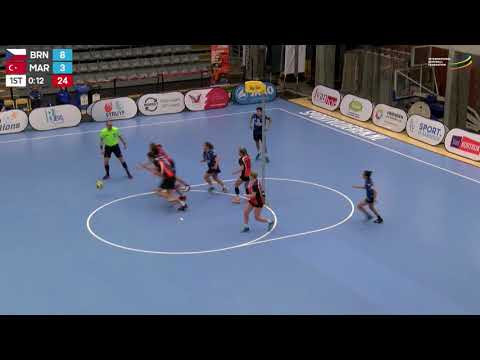
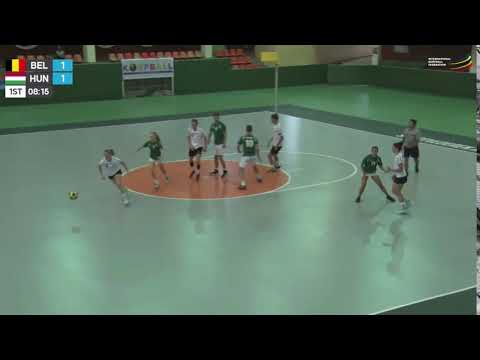
After an infringement that would be punished with a re-start, if the non-offending side has possession of the ball, the referees do not stop the game and allows the play to continue showing the play-on signal (see referee signals).
When an out‐ball (see 6.15) should be awarded the referees should not play-on, even if the non‐ offending side has possession of the ball.
Example #1
Example of 7.2 – Play-on
Example #2
Example of 7.2 – Play-on
7.3 Re-start
a) Place of the re-start
The re-start is taken from the spot where the infringement was committed.
If 6.14 (to play outside one’s zone) is violated then the re-start is taken outside the field of play or in the other zone near the point where the offending player touched the ground or hindered the opponent player.
If 6.15 (out-ball) is violated then the re-start is taken from outside the field, near the boundary line where the ball or the offending player crossed the line.
If 6.16 (to exceed the allowed time-limit in the attack zone) is violated then the re-start is taken in the place where the attacker has ball possession at the moment the buzzer sounds, or in the last place where they touched the ball just before the buzzer sounds.
b) Conditions to take the re-start
It is not permitted to hinder actively or passively the player taking a re-start.
Passive hindering is where the opponent prevents the ball from being brought quickly into play by standing within an arm’s distance in front of the taker of the re-start, even not hindering the throw by any movement of the arms or body. If there is any movement of the arms or body to attempt to delay or prevent the throw, then the hindering is no longer passive but active.
c) When the ball is brought into play
The ball is brought into play after it has travelled at least 2.50 m from the place of the re-start, measured along the ground.
d) How to take a re-start
At the moment the player taking the re-start has, or can take, the ball in their hands the referees shall blow their whistle.
The player taking the re-start has, from that moment, four (4) seconds to bring the ball into pla.
e) Infringements during the take of a re-start
After the referees have blown the whistle for the re-start to be taken, they can award:
A new re-start in favour of the other team when:
- the taker of the re-start has not brought the ball into play within four (4) seconds;
- the taker of the re-start touches the boundary lines or the playing area on the other side of the boundary line in case of an “out ball” (see 6.15) and “to play outside one’s zone” (see 6.14), before the ball has left their hands;
- a player from the team of the taker of the re-start touches the ball before it has been brought into play
A new re-start for the same team when:
- an attacker player from the opposite team touches the ball before it has been brought into play or tries to actively or passively hinder the taker of the re-start.
A free pass for the same team when:
- a defender player from the opposite team touches the ball before it has been brought into play or tries to actively or passively hinder the taker of the re-start.
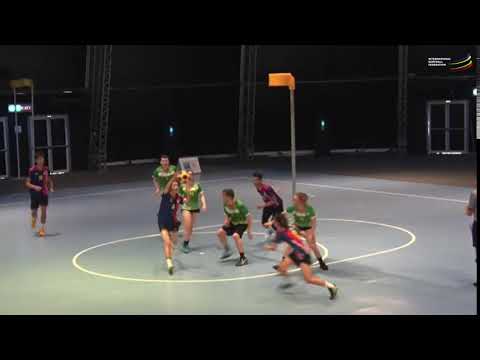
Example #1
Example of 7.3 – Restart
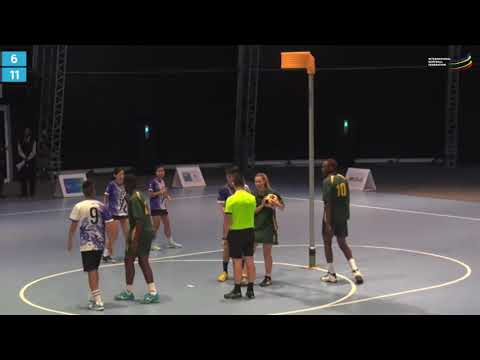
Example #2
Example of 7.3 – Restart
7.4 Free pass
a) Place of the free pass
The free pass is taken inside the free pass area (see diagram 3), by a player of the attack zone standing with one foot immediately behind the penalty spot.
b) How to take a free pass
After making the signal for a free pass (see referee signals), the referees allow the attackers to take their positions.
At the moment when the taker of the free pass has the ball in their hands or is able to take it, and the other attackers are positioned, the referees give the four-second signal (see referee signals).
This begins the preparation period, which gives the defenders a maximum of four (4) seconds to position themselves. All players must satisfy all five conditions described below before the referees whistle for the free pass to be taken.
The referees do not have to wait the full four (4) seconds. If all conditions are satisfied before that time, they shall immediately blow their whistle.
c) Conditions to take the free pass
Before the referees can whistle for the free pass to be taken (preparation period)
1 – The taker of the free pass must stand with one foot immediately behind the penalty spot and the other foot anywhere in the lighter shaded area behind the spot, shown in diagram 3 (free pass area).
2 – The other three (3) attacking players must stand outside the free pass area and must be at a distance of at least 2.50 m from each other.
3- The defender players must stand outside the free pass area.
4 – No player is allowed to straddle the post with one foot on one side and one foot on the other. They must choose to stand on one side or the other.
5 – In the immediate vicinity of the free pass area, players are not allowed to place a foot between the legs and the feet of an opponent.
After the referees whistle for the free pass to be taken
6 – The taker of the free pass must throw the ball within no more than four (4) seconds and before the ball has left their hand(s), they must not touch the penalty spot or anywhere in the darker shaded zone shown in diagram 3 (free pass area) with either foot or any part of their body.
7 – Conditions 2, 4 and 5 (above) must be satisfied until the ball is brought into play.
8 – Condition 3 (above) must be satisfied until the taker of the free pass makes a clearly visible movement of the ball, an arm or a leg. It does not matter whether this movement actually leads to a throw or is meant as a feint.
d) When the ball is brought into play
The ball is brought into play, after the referees have blown the whistle for the free pass to be taken, when the taker of the free pass throws the ball and one of the following three things occur:
- a player of the defending team touches the ball;
- another player from the attacker team touches the ball whilst standing with both feet in contact with the floor outside of the free pass area and the ball has clearly travelled through the air for a distance of at least 1 m (measured along the ground);
- the ball has travelled completely outside of the free pass area.
e) Infringements during the taking of a free pass
Once a free pass has been awarded, until the ball is brought into play by the taker of the free pass, the referees shall punish any infringements of the rules even when the game is stopped. If so, they should whistle twice quickly in succession, the first time to restart the game and the second time to stop play and punish the offender.
Any violation of conditions described in 7.4.c) should be punished by the referees as follow:
- if committed by an attacker, a re-start to the defending team;
- if committed by a defender, a new free pass to the attacker team. Except if the ball is out of the hands of an attacker and is on its way to the korf at the time the whistle is blown to signalise the infringement, then provided the conditions of 5.5 (goals) apply, the goal will count if the ball goes through the korf.
If the defending team makes an infringement for the second time at the same free pass, a penalty should be awarded to the attacker team.
Infringements that may occur during the preparation period
- if any player does not satisfy one or more of the conditions 1 to 5 mentioned above before the end of the four (4) second preparation period;
- If players from both teams are inside the free pass area at the end of the four (4) seconds preparation period, then the referees will punish the player who is nearest to the penalty spot.
- If the referees consider players from both teams are at the same incorrect distance at the end of the four (4) seconds preparation period, then the attacking team shall be penalised.
- If a defender is within the 2.50 m distance from the penalty spot and two attackers are within 2.50 m of each other without trying to take advantage of this situation at the end of the four (4) seconds preparation period, then the referees punish the infringement of the defender.
Infringements that may occur after the referees have whistled for the free pass to be taken
- If any player does not satisfy one or more of the conditions 6 to 8 mentioned above.
The referees must keep a strict hold upon the conditions concerning the set time and distance.
At the same time as raising the arm, the referees may indicate to the players, or tell them, that they need to take their distance..
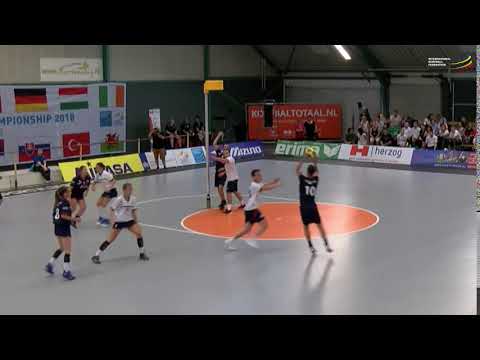
Example#1
Example of 7.4 – Free pass
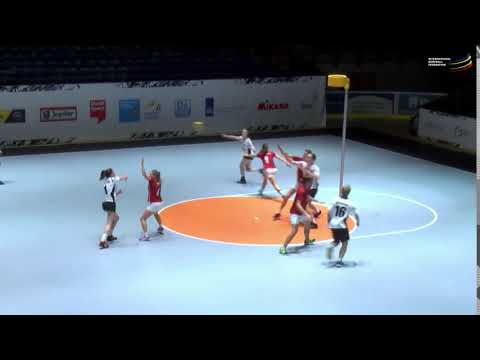
Example #2
Example of 7.4 – Free pass
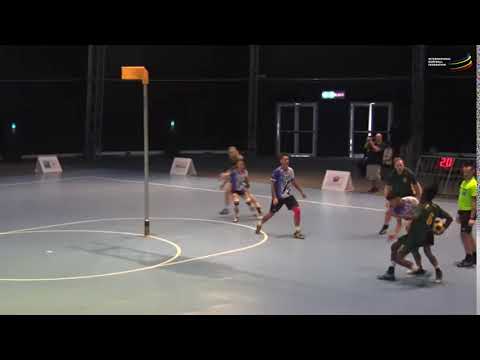
Example #3
Example of 7.4 – Free pass
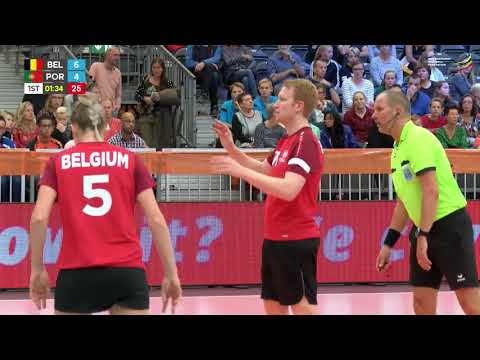
Example #4
Example of 7.4 – Free pass + 2nd fault (distance)
Example #5
Example of 7.4 – Free pass + 2nd fault (foot stepping on the line)
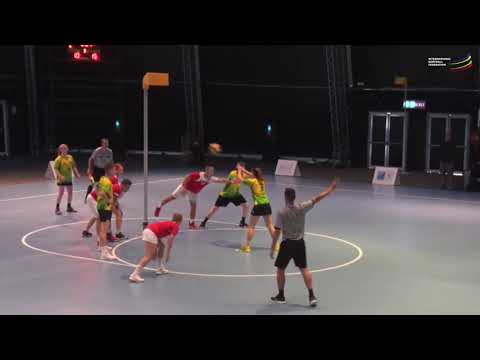
Example #6
Example of 7.4 – Free pass + 2nd fault (distance)
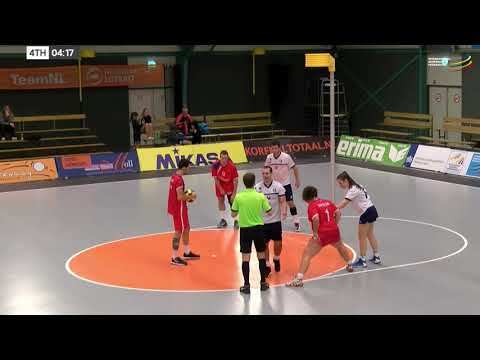
Example #7
Example of 7.4 – Free pass
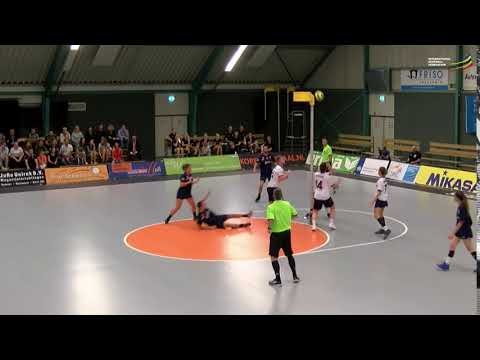
7.5 Penalty
a) Place of a penalty
The penalty is taken inside the penalty area (see diagram 2) by a player of the attack zone standing immediately behind the penalty spot.
b) Conditions to take the penalty
A penalty is taken by the attacker who lost the free scoring chance, which is either
- the attacker who had or would have had the free scoring chance at the moment of the infringement;
or - the attacker who would have had the free scoring chance at the moment of the repeated infringement;
If, in the opinion of the referees, no player had a free scoring opportunity at the moment of the repeated infringement, the player fouled is the penalty taker.
In the specific situation under 7.4 e) of a second infringement during the taking of a free pass that results in the award of a penalty, the penalty taker is the attacker who is taking the free pass.
Any time the player appointed by the referees to take the penalty is substituted, the penalty can be taken by any other player in the attack zone.
Before the referees can whistle for the penalty to be taken
1 -The taker of the penalty must stand with one foot immediately behind the penalty spot and the other foot anywhere in the lighter shaded area behind the spot, shown in diagram 2 (penalty area).
2 – All the other players must stand outside the penalty area.
3 – From the opposing team, all players and all persons of that team’s bench must refrain from any actions or comments that may disturb the person taking the penalty.
After the referees have whistled for the penalty to be taken
4 – Once the referees have whistled for the penalty to be taken, whenever the ball leaves the hands of the taker it must go towards the korf.
5 -The taker must not touch the penalty spot or anywhere in the darker shaded zone shown in
diagram 2 (penalty area), with either foot or any part of their body, before the ball has left their hand(s).6 – Conditions 2 and 3 (above) must be satisfied until the ball is brought into play.
c) When the ball is brought into play
The ball is brought into play as soon as it leaves the hands of the taker of the penalty.
d) How to take a penalty
There is no time limit to prepare and take the penalty.
As soon as conditions 1 and 2 (above) are satisfied the referees will blow his whistle for the penalty to be taken.
e) Infringements during the taking of a penalty
Any violation of conditions 4, 5 and 6 described above should be punished by the referees as follows:
- If committed by an attacker, the penalty shot is invalid and a re-start is award to the defending team.
- If committed by a defender, then the penalty must be retaken if there is no goal. This can be considered misbehaviour, especially when repeated.
The penalty must be retaken if it is taken before the referee has blown his whistle to indicate that the penalty may be taken.
If necessary, a penalty can be taken after the end of the playing time.
Example #1
Example of 7.5 – Penalty
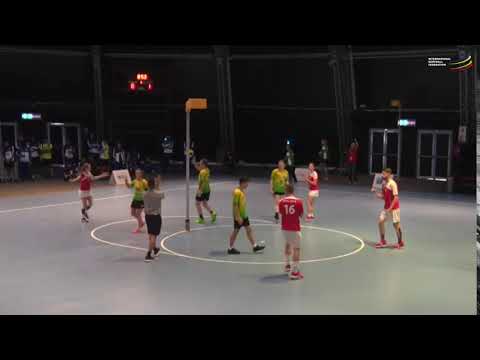
Example #2
Example of 7.5 – Penalty
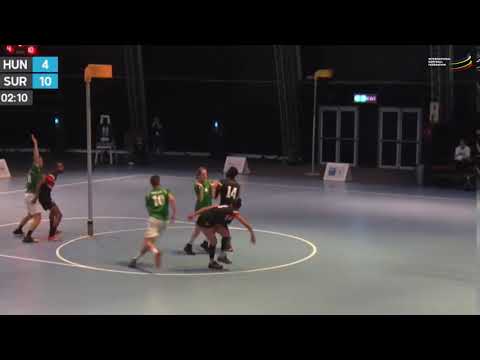
Example #3
Example of 7.5 – Penalty
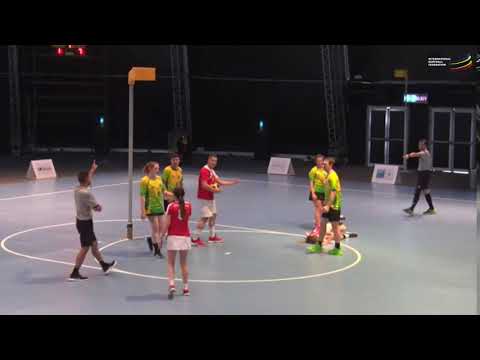
Example #4
Example of 7.5 – Penalty
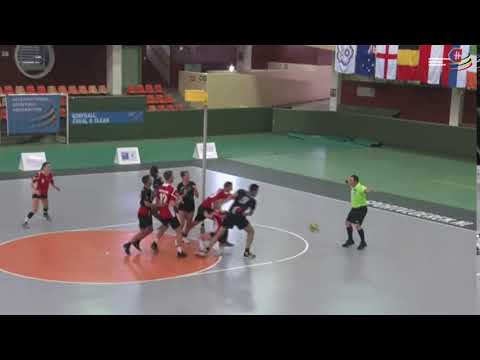
Example #5
Example of 7.5 – Penalty
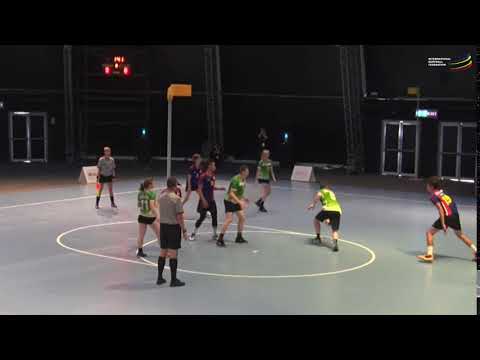
Example#6
Example of 7.5 – Penalty
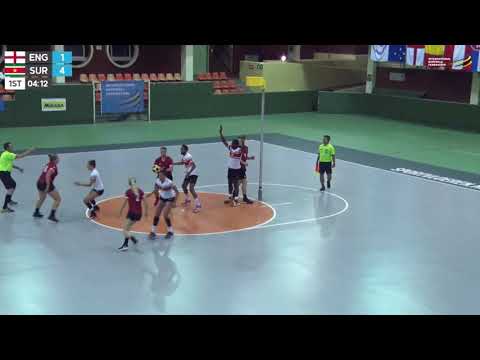
Example #7
Example of 7.5 – Penalty (repeated faults in previous attacks)
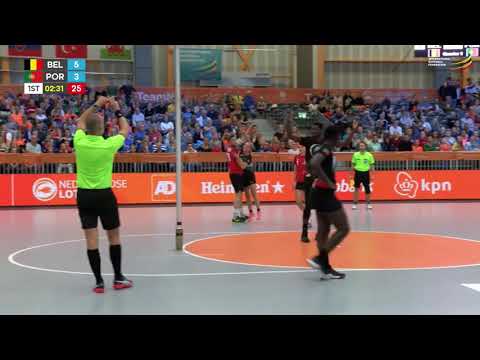
- the attacker who had or would have had the free scoring chance at the moment of the infringement;
7.6 Disciplinary
The referees can consider any unsporting action from a player, coach, substitute player or any other person attached to a team, as misbehaviour, e.g. inadmissible forms of appeal, any kind of discriminatory comments or actions or demonstrative gestures against the referees or any other participant in the match (see 4.1 to 4.11) and spectators.
In the case of misbehaviour, the referees can::
- informally warn the person that they must change their method of playing or their behaviour;
- formally warn the person by showing them a yellow card;
- formally warn the same person for the second time by showing them a second yellow card, followed by a red card;
- in case of serious misbehaviour, send the person off at once by showing them a red card.
- with respect to the coach or assistant coach, the referees have the power to forbid them from leaving the bench without their permission during the rest of the match.
A person who has been given a yellow card:
- If a player is currently playing, they must be substituted and sit on the bench for 4 minutes of real playing time. They may leave the bench to warm up or to be substituted only after that period;
- If a player is a substitute player, they may only be available to take part in the match after 4 minutes of real playing time;
- If they are any other person attached to the team, the card will be attributed to the coach with the consequences described below;
- If they are the coach or assistant coach, both must sit on the bench for 4 minutes of real playing time. For that period, they lose the right to leave their place on the bench for any reason, including:
-
- to give instructions to the team’s players;
- to request and / or use a time-out (see 5.8);
- to request and execute a substitution (see 5.9).
-
If the team B coach requests a time out during the time penalty for the team A coach, team A coach and assistant coach cannot stand or talk with the team during the time-out.
If the coach had requested a time-out prior to receiving a yellow card, the time-out will be withdrawn and will not take place. The team will be able to use it after the time penalty has finished.A person shown a red card must leave the playing area (see 1.1) and sit in the area reserved for spectators or leave the hall altogether, whichever they choose and:
- If they are a player, they must be replaced by a substitute;
- If they are any other person attached to the team, the card will be attributed to the coach, and both must abandon the field of play and the assistant coach loses all coaching rights and must sit on the bench for the rest of the match. After a period of 4 minutes, the captain can replace the coach in requesting a time-out and requesting and executing substitutions.
Examples of actions that may be treated as misbehaviour:
- any unsporting action as inadmissible forms of appeal or demonstrative gestures against any other participant in the match or spectators;
- uttering insults, no matter to whom addressed;
- making remarks to a referee about their knowledge of the rules;
- leaving the field of play without informing the referees;
- repeatedly infringing the rules, especially after a warning;
- striking, punching, kicking or intentionally running down an opponent;
- deliberately moving the post during a shot;
- deliberately throwing the ball against the body of an opponent;
- hindering the taker of a re-start;
- preventing the preparation of the free pass or trying to prevent the taking of the free pass;
- disturbing the person taking the penalty;
- both teams intentionally passively playing the game in turns or appear to accept the score as it is with no ambitions to change it. The referees shall warn both captains together that this form of play is regarded as misbehaviour and if continued may lead to a formal warning and the game to be stopped;
- delaying the retaking of positions after a time-out (the captain shall be warned);
- failing to inform the referees of a substitution (the coach shall be warned);
- a coach or assistant coach entering the field of play without the permission of the referees;
- a coach or assistant talks with the team during the time penalty;
- a coach or assistant coach misusing the right to leave their place in the bench (see 4.4);
- a captain misusing the right to draw the referee’s attention to anything they think desirable in the interest of the good progress of the match and/or criticism of the referees (see 4.3);
- throwing the ball far outside the field;
- kicking the ball when the game has been stopped;
- time wasted when changing zones.
The jurisdiction of the referees, with respect to occurrences of misconduct for which a card can be shown and the occurrence can be recorded on the match form, is from the time the team sheet is handed in (declaring which players will start and which players will be substitutes), until the match form is signed by the captains and the referee.
If misconduct takes place before the match, or during the half time period, then the yellow or red card shall be shown to the aforementioned person concerned at that time and the captain and coach of both teams shall be informed before the next half begins.
8 REFEREE SIGNALS
The referees must use the official referee signals to clearly communicate their decisions in accordance with 4.7 (d). After blowing the whistle for an infringement the referee shall use the official referee signals to communicate whether the decision is a re-start a free pass or a penalty, and then the type of infringement.- 8.1 Signals about the game
- 8.2 Signals about the Infringements of the Rules
- 8.3 Signals about the sanctions and disciplina
8.1 Signals about the game
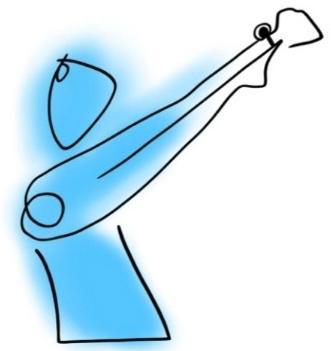 5.2 Playing time
Start/stop playing time
Mimic starting/stopping a stopwatch
5.2 Playing time
Start/stop playing time
Mimic starting/stopping a stopwatch
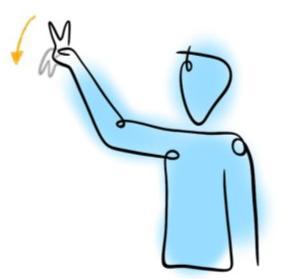 5.5 Goals
2 points
Index and middle fingers extended and pointed upwards and downwards
Used only in Beach Korfball and Urban Korfball
5.5 Goals
2 points
Index and middle fingers extended and pointed upwards and downwards
Used only in Beach Korfball and Urban Korfball
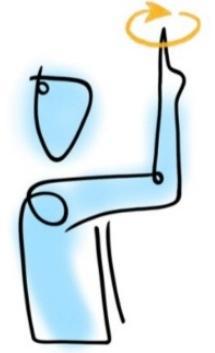 5.6 Zone changes and changes of ends
Change zones
Circular motion of hand with index finger extended
5.6 Zone changes and changes of ends
Change zones
Circular motion of hand with index finger extended
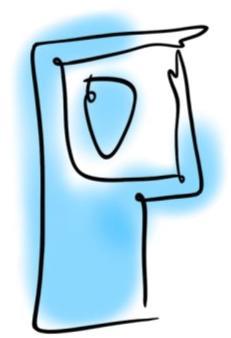 5.8 Time-out
Open palms forming a 'T'
5.8 Time-out
Open palms forming a 'T'
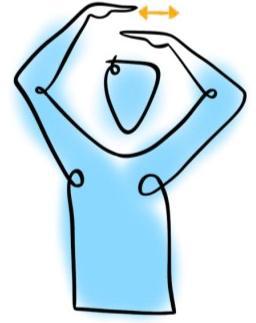 5.9 Substitutions of players
Index fingers point in opposite directions
5.9 Substitutions of players
Index fingers point in opposite directions
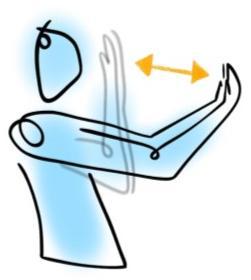 5.10 Treatment of Injured players
Open palms alternate moving towards and away from the face
5.10 Treatment of Injured players
Open palms alternate moving towards and away from the face
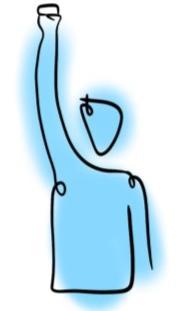 6.16 Reset the Shot Clock
Shot Clock
Arm raised with closed fist
6.16 Reset the Shot Clock
Shot Clock
Arm raised with closed fist
8.2 Signals about the Infringements of the Rules
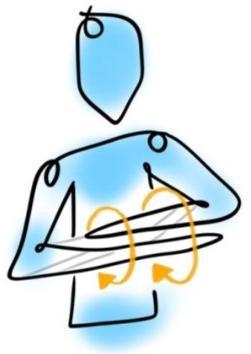 6.1 to run with the ball
Palms down rotate in front of the body
6.1 to run with the ball
Palms down rotate in front of the body
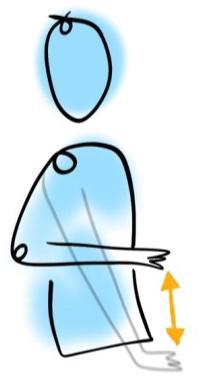 6.2 to solo-play
Imitate bouncing a ball
6.2 to solo-play
Imitate bouncing a ball
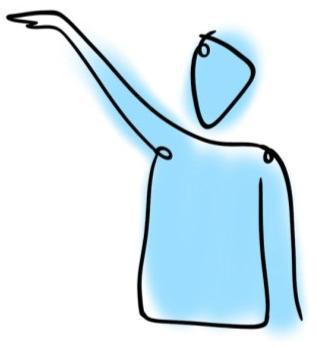 6.3 to shoot from a defended position
With arm raised, open palm faces the floor
6.3 to shoot from a defended position
With arm raised, open palm faces the floor
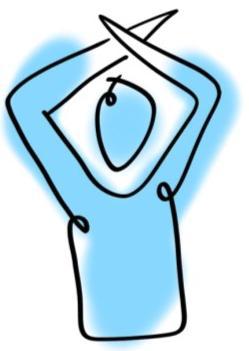 6.4 Shoot after cutting past another attacker
Cross forearms
6.4 Shoot after cutting past another attacker
Cross forearms
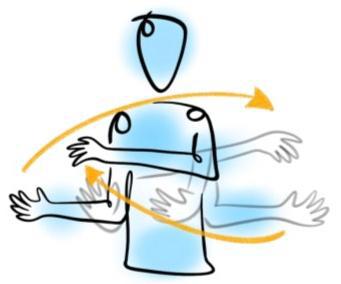 6.5 to hand the ball to another player of one's own team
Move arms to imitate handing off a ball
6.5 to hand the ball to another player of one's own team
Move arms to imitate handing off a ball
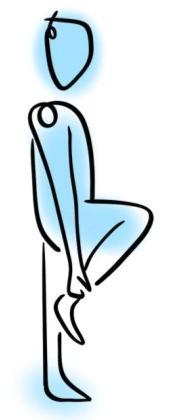 6.7 to play the ball with leg or foot
Football
Touch leg below the knee
6.7 to play the ball with leg or foot
Football
Touch leg below the knee
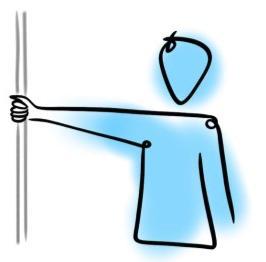 6.8 to touch or hold the post
Use the post
Arm extended and semi-open hand mimics holding the post
6.8 to touch or hold the post
Use the post
Arm extended and semi-open hand mimics holding the post
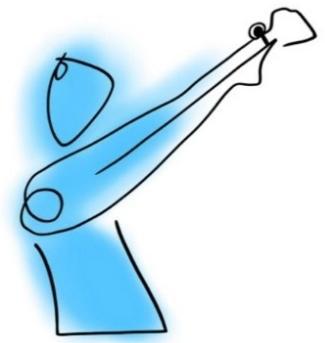 6.9 to passive play
Point at stopwatch
6.9 to passive play
Point at stopwatch
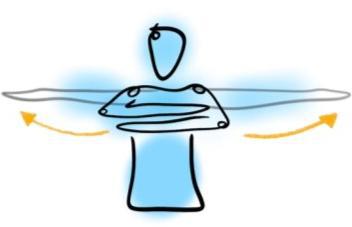 6.10 to score from the defence zone of the attacking team or directly from a throw off, out-ball, re-start or free pass
Scissor-like action with forearms horizontal at chest level
6.10 to score from the defence zone of the attacking team or directly from a throw off, out-ball, re-start or free pass
Scissor-like action with forearms horizontal at chest level
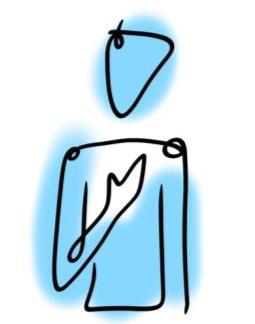 6.11 to hinder an opponent excessively
a) Contact the body of the opponent
Open palm touches chest
6.11 to hinder an opponent excessively
a) Contact the body of the opponent
Open palm touches chest
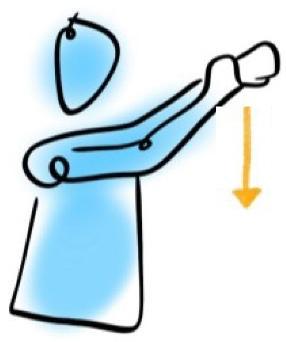 6.11 b) to hinder an opponent excessively
b) Blocking the arm
Arm extended and wrist grasped and moved downwards
6.11 b) to hinder an opponent excessively
b) Blocking the arm
Arm extended and wrist grasped and moved downwards
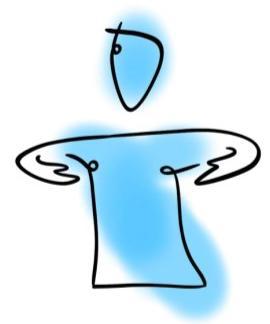 6.11 c) to hinder an opponent excessively
c) Use opponent space
Both arms used to mimic embracing a person
6.11 c) to hinder an opponent excessively
c) Use opponent space
Both arms used to mimic embracing a person
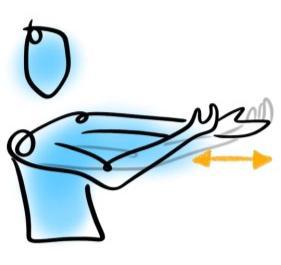 6.11 to hinder an opponent excessively
d) Out of the hands
With arm extended and palm open, other hand performs sweeping movement away from the body
6.11 to hinder an opponent excessively
d) Out of the hands
With arm extended and palm open, other hand performs sweeping movement away from the body
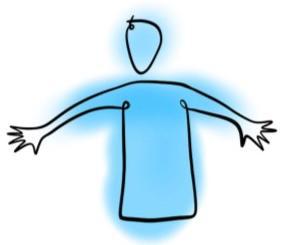 6.12 to push, to cling to, or to hold off an opponent
a) Holding off
Arms lifted at sides and palms face backwards
6.12 to push, to cling to, or to hold off an opponent
a) Holding off
Arms lifted at sides and palms face backwards
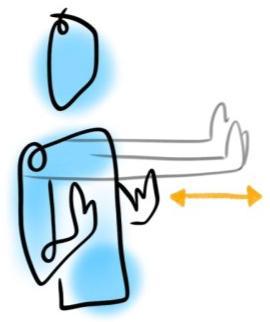 6.12 to push, to cling to, or to hold off an opponent
b) Pushing
Open palms imitate a push
6.12 to push, to cling to, or to hold off an opponent
b) Pushing
Open palms imitate a push
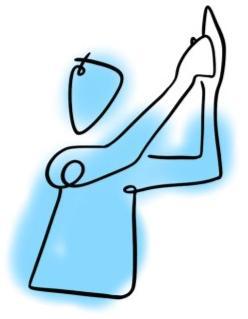 6.13 to play in a dangerous manner
Dangerous play
Closed fist strikes open palm
6.13 to play in a dangerous manner
Dangerous play
Closed fist strikes open palm
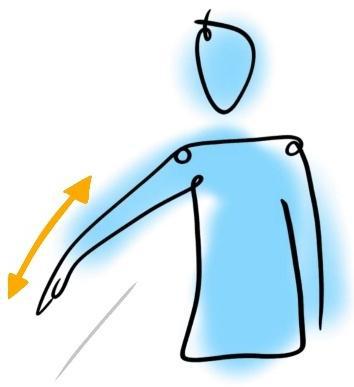 6.14 to play outside one’s zone
6.15 out-ball
Open palms moved forwards and backwards along imaginary line
6.14 to play outside one’s zone
6.15 out-ball
Open palms moved forwards and backwards along imaginary line
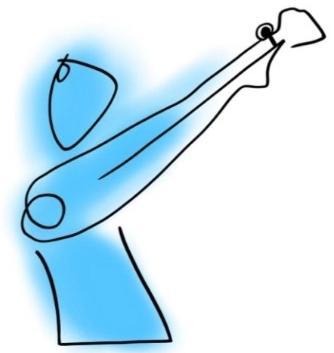 6.16 to exceed the allowed time-limit in the attack zone
Shot Clock
Point at stopwatch
6.16 to exceed the allowed time-limit in the attack zone
Shot Clock
Point at stopwatch
8.3 Signals about the sanctions and disciplinary
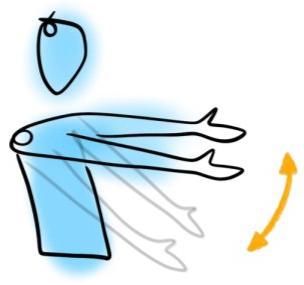 7.2 Play-on
Open palm raised towards korf of attacking team
7.2 Play-on
Open palm raised towards korf of attacking team
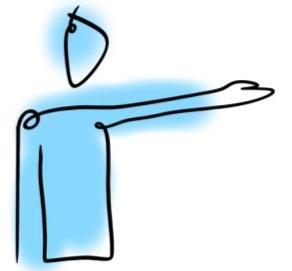 7.3 Re-start
Vertical palm point towards korf of offending team
7.3 Re-start
Vertical palm point towards korf of offending team
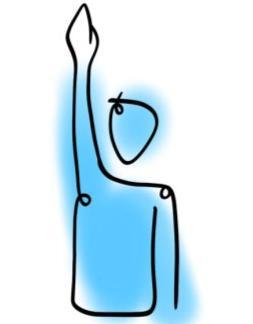 7.4 Free pass
Arm raised with open palm
7.4 Free pass
Arm raised with open palm
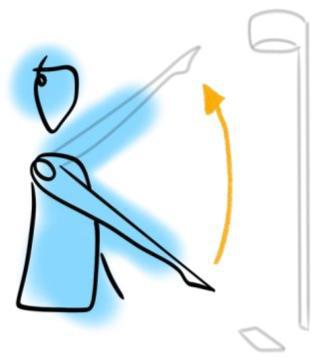 7.5 Penalty
Index finger points to place where penalty occurred then to the korf
7.5 Penalty
Index finger points to place where penalty occurred then to the korf
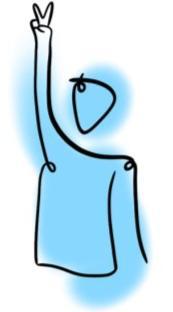 7.5 Penalty for repeat Infringement
Arm raised with two fingers extended
7.5 Penalty for repeat Infringement
Arm raised with two fingers extended
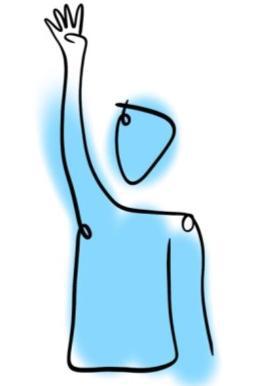 7.4 Free pass
4 Seconds
Arm raised with four fingers extended
7.4 Free pass
4 Seconds
Arm raised with four fingers extended
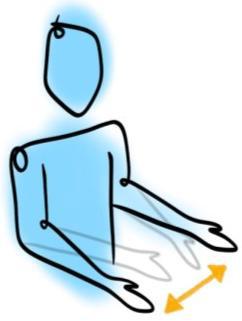 7.4 Free pass & 7.5 Penalty
Distance
With palms facing, arms move horizontally toward each other
7.4 Free pass & 7.5 Penalty
Distance
With palms facing, arms move horizontally toward each other
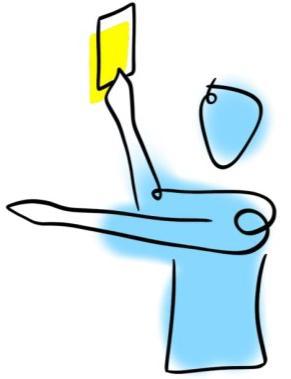 7.6 Disciplinary
a) Yellow card
One hand shows card, while other points at the player
7.6 Disciplinary
a) Yellow card
One hand shows card, while other points at the player
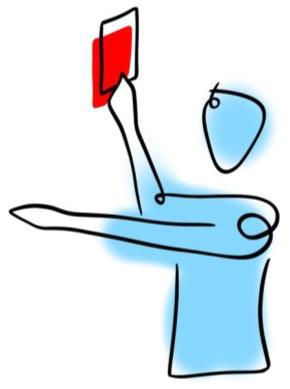 7.6 Disciplinary
b) Red card
One hand shows card, while other points at the player
7.6 Disciplinary
b) Red card
One hand shows card, while other points at the player